Burial at Sea on Long Island and in New York City: Rules and Planning
From Freeport and Point Lookout to Montauk, Long Island families have a long tradition of returning loved ones to the Atlantic. The most common question is where the line is: the Sound and the south-shore bays are not “the sea” under federal law. Here is how the rules work, where boats go, and what to do on land.
By The Memorial Market Editorial Team · Updated · 8 min read
Quick answer
A burial at sea off Long Island or New York City means scattering ashes in the Atlantic Ocean at least 3 nautical miles from land, under the EPA’s general permit, and reporting it to EPA Region 2 within 30 days. There is no application or fee. Long Island Sound and the south-shore bays are inland waters, not ocean, so boats run out through an inlet (Jones, Fire Island, Shinnecock, Moriches) or past Montauk Point first. New York allows scattering at sea or on private land with the owner’s permission; on public land, ask first. Fire Island National Seashore allows scattering without a permit 100 yards from trails, roads, facilities and water.
Key facts
- Ocean: at least 3 nautical miles from land; report to EPA Region 2 within 30 days; no application, no fee.
- Long Island Sound is state inland water (U.S. Supreme Court, 1985), as are the bays behind the barrier beaches.
- New York: scatter at sea or on private land with permission; public land may be prohibited or need a written permit.
- Fire Island National Seashore: no permit if 100+ yards from trails, roads, developed facilities and water; otherwise contact the permit office.
- NYC parks allow scattering with rules (not in water, fully dispersed, 20+ people need a permit).
- Veterans: the nearest Navy port of embarkation is Norfolk, Virginia.
Where “the sea” starts off Long Island
The EPA’s general permit covers burial at sea in ocean waters at least 3 nautical miles from land, measured from the low-water line or from a closing line drawn across the openings of bays and rivers. Lakes, rivers and bays are left to the states (EPA; 40 CFR 229.1).
For Long Island that matters. In 1985 the U.S. Supreme Court decreed that the whole of Long Island Sound, and Block Island Sound west of a line from Montauk Point to Watch Hill, Rhode Island, are state inland waters (United States v. Maine, 471 U.S. 375). The Great South Bay, Hempstead Bay, Moriches Bay and Shinnecock Bay sit behind the barrier beaches, inside the inlets. So the 3 nautical miles are counted from the ocean beaches and the inlet closing lines, not from the North Shore.
| Water | Status | What to do |
|---|---|---|
| Atlantic south of the barrier beaches | Ocean water under the EPA permit | Go 3+ nautical miles past the beach or inlet; report within 30 days |
| Long Island Sound | State inland water | Not covered by the EPA permit; most captains go to the ocean instead |
| Great South Bay and other south-shore bays | Inland water | Not covered by the EPA permit; ask before scattering |
| East of Montauk Point | Ocean beyond the Montauk–Watch Hill line | Go 3+ nautical miles out |
| New York Harbor and the rivers | Inland water | Not covered; boats from NYC run out past Sandy Hook and the Rockaways |
How a Long Island burial at sea works
Choose a harbor
South Shore families often leave from Freeport, Point Lookout, Captree or Moriches; East End families from Shinnecock or Montauk; NYC families from Sheepshead Bay or the Rockaways. Pick the shortest run to open ocean.
Book a licensed captain
Look for a U.S. Coast Guard–licensed captain who offers memorial trips, and ask whether they file the EPA report for you.
Prepare the ashes
Bring them in the crematory container to pour, or in a biodegradable water urn. Only the ashes, the urn and loose natural flowers go in the water.
The ceremony
Once past 3 nautical miles, the captain idles, someone reads, the ashes are released and flowers follow. See our burial at sea prayers and readings.
Report it
Within 30 days, report the burial to the EPA. New York departures report to EPA Region 2 (EPA).
Weather off the South Shore changes quickly, and fall and winter seas can be rough. Captains will reschedule rather than run an unsafe trip, so leave room in your plans.
Scattering on land: Fire Island, state parks and NYC
New York’s Department of State says remains may be scattered “at sea or on private grounds with the permission of the landowner,” and that “scattering on public land may be prohibited or may be allowed only by written permit” (NY Department of State).
- Fire Island National Seashore: scattering without a permit is allowed if the remains are cremated and pulverized and you are at least 100 yards from any trail, road, developed facility or body of water; from the air, at least 2,000 feet up and not over developed areas or water. Otherwise contact the park’s permit specialist (NPS compendium).
- Jones Beach, Robert Moses, Montauk Point and other state parks: NY State Parks says ashes cannot be released in state parks unless officially approved, so contact the regional office first (NYS Parks).
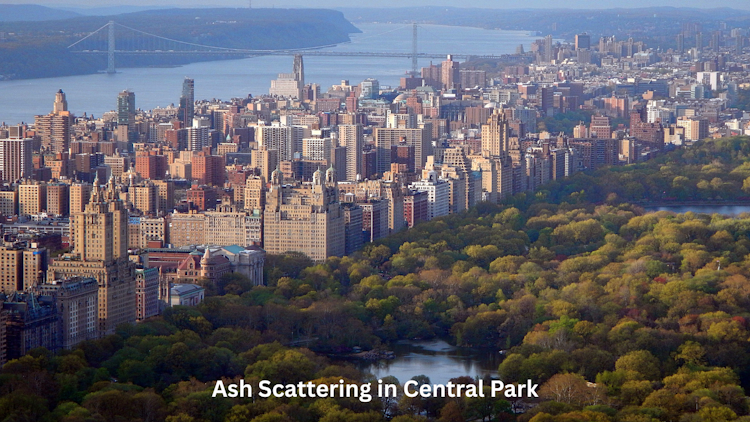
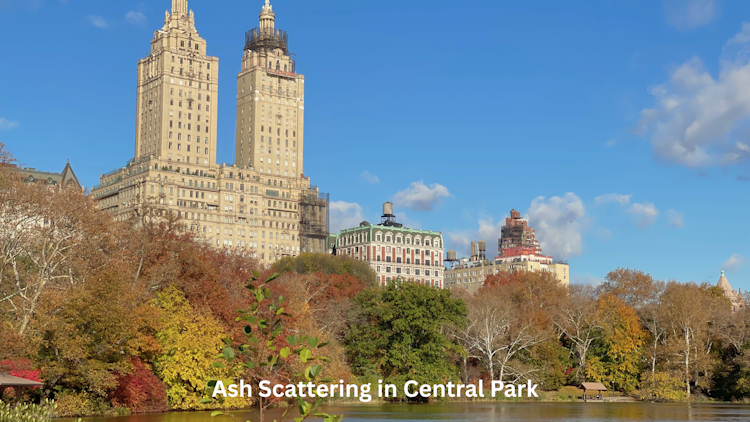
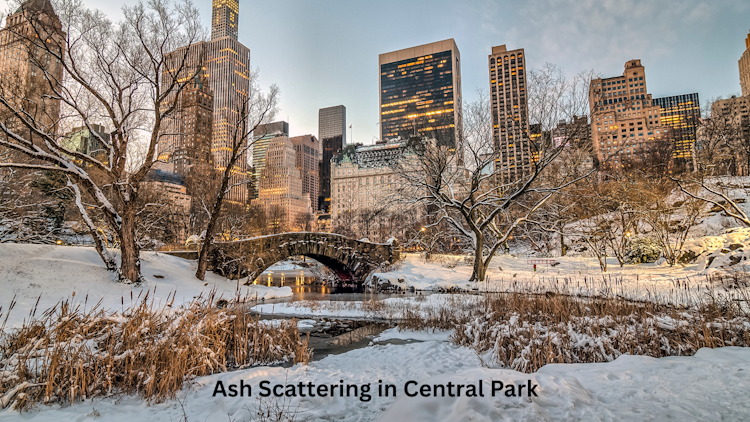
- NYC parks: allowed under NYC Parks rules: fine ashes, fully dispersed, not in a body of water, no markers, and a permit for 20 or more people (NYC Parks). See scattering ashes in New York.
- Sandy Hook and Jamaica Bay (Gateway National Recreation Area): contact the park’s permit office (NPS).






Frequently asked questions
Can you scatter ashes in the ocean off Long Island?
Yes. Go at least 3 nautical miles from land into the Atlantic and report it to EPA Region 2 within 30 days. There is no application or fee.
Can you scatter ashes in Long Island Sound?
Long Island Sound is state inland water, not ocean, so the EPA burial at sea permit doesn’t cover it. Most Long Island captains run out to the Atlantic instead.
Can you scatter ashes in the Great South Bay?
The south-shore bays are inland waters, outside the EPA permit. For a clearly lawful sea burial, go out through an inlet to at least 3 nautical miles offshore.
Can you scatter ashes at Jones Beach or Robert Moses?
These are New York State Parks, which say ashes cannot be released unless officially approved. Contact the regional parks office first, or scatter offshore by boat.
Can you scatter ashes on Fire Island?
In Fire Island National Seashore, yes, without a permit, if you are at least 100 yards from trails, roads, developed facilities and water. Otherwise contact the park’s permit specialist.
Can you scatter ashes in the East River or the Hudson?
Rivers and the harbor are inland waters outside the EPA permit, and NYC Parks rules don’t allow scattering into water from its parks. Boats from the city run out to the ocean instead.
Do I need a permit for a burial at sea in New York?
No application is needed under the EPA general permit; you report within 30 days afterward. Your funeral home handles the state burial or cremation permit before cremation.
General information, not legal advice. Laws and agency policies change; confirm with the agency, landowner or your provider before you go.
Sources
Every rule and price range above comes from these pages, checked November 17, 2026.
- U.S. EPA, Burial at Sea
- 40 C.F.R. 229.1, Burial at sea general permit
- United States v. Maine, 471 U.S. 375 (1985), Rhode Island and New York boundary decree
- New York Department of State, Crematory frequently asked questions
- New York State Parks, FAQ (scattering ashes)
- NYC Parks, Rules for scattering cremated remains
- Fire Island National Seashore, Superintendent’s Compendium
- Gateway National Recreation Area, Permits and reservations
- U.S. Navy, Burial at Sea program (MyNavy HR)