Burial at Sea: The Complete Guide to Rules, Costs and Planning
A burial at sea returns someone you love to the ocean, with family on deck, flowers on the water and the horizon all around. Here is how it works in the United States: the federal rules, what it really costs, the Navy program for veterans, and how to plan a farewell that feels like them.
By The Memorial Market Editorial Team · Updated · 17 min read
Quick answer
Burial at sea is legal in the U.S. under an EPA general permit (40 CFR 229.1). Cremated remains can be scattered or placed in the ocean at least 3 nautical miles from land (about 3.45 miles) in water of any depth; a full body needs at least 3 nautical miles and 600 feet of water, weighted to sink. No application or fee is required, but the burial must be reported to the EPA within 30 days. Private boats in Southern California typically charge about $175–$500 for an unattended scattering and $500–$2,600 for a family-attended one, while full-body sea burials run about $6,500–$10,000. Eligible veterans and their dependents can request a Navy burial at sea, though families cannot attend.
Key facts
- Federal rule: 40 CFR 229.1, the EPA’s general permit for burial at sea under the Marine Protection, Research and Sanctuaries Act.
- Distance: at least 3 nautical miles from land for both ashes and full-body burials. States cannot relax this rule.
- Depth: no minimum for cremated remains; at least 600 feet for a full body (1,800 feet in three areas off Florida and Louisiana).
- Paperwork: no permit application and no EPA fee, but you must report the burial online within 30 days.
- Allowed with the remains: flowers and wreaths that break down naturally. Not allowed: plastic, metal flowers, monuments, balloons and pets.
- California adds a county disposition permit (San Diego County charges $12) and a verified statement to the local registrar within 10 days.
What is a burial at sea?
A burial at sea, also called a sea burial, ocean burial or memorial at sea, is the placement of human remains in the ocean as their final resting place. Today almost all sea burials in the United States are of cremated remains: the ashes are scattered on the water or lowered in a water-soluble urn from a boat or an aircraft. A smaller number of families choose a full-body burial at sea, where the body is wrapped in a weighted shroud or placed in a prepared casket and sunk in deep water.
Sailors have been committed to the deep for as long as people have gone to sea, and the U.S. Navy still conducts burials at sea for service members, veterans and their families. For many civilian families, the appeal is simple: the person loved the ocean, wanted no grave to tend, or would rather be remembered on a sunlit boat than in a cemetery. It is also one of the most affordable ways to say goodbye after cremation.
You can arrange a burial at sea three ways: with a private charter or memorial boat company (family aboard or unattended), with an aerial scattering service that releases ashes over the ocean, or, for eligible veterans and dependents, through the U.S. Navy Burial at Sea program. Each is covered below, along with the rules that apply to all of them.
Is burial at sea legal? The EPA rules, explained
Yes. The Environmental Protection Agency grants a general permit for burial at sea under the Marine Protection, Research and Sanctuaries Act. It is written at 40 CFR 229.1 and covers anyone transporting human remains from the United States, and any U.S.-registered or U.S.-flagged vessel or aircraft. Because it is a general permit, there is nothing to apply for in advance and no EPA fee. You simply follow the conditions and report the burial afterward (EPA).
| Requirement | Cremated remains (ashes) | Full-body burial |
|---|---|---|
| Minimum distance from land | 3 nautical miles | 3 nautical miles |
| Minimum water depth | None | 600 feet (100 fathoms); 1,800 feet off east-central Florida, the Dry Tortugas, and from Pensacola to the Mississippi River Delta |
| How the remains go in | Scattered on the surface, or in a container that sinks and breaks down | Must sink rapidly and permanently: a weighted shroud or a prepared, weighted casket |
| Permit application | None (general permit) | None (general permit) |
| EPA fee | None | None |
| Report to the EPA | Within 30 days, to the EPA region the boat departed from | Within 30 days, to the EPA region the boat departed from |
| Flowers and wreaths | Allowed if readily decomposable | Allowed if readily decomposable |
Sources: 40 CFR 229.1 and the EPA burial at sea page.
Why 3 nautical miles, and how far that really is
Three nautical miles is about 3.45 statute miles or 5.6 kilometers. The EPA measures it from the baseline used for the territorial sea: the ordinary low-water mark, or a closing line drawn across the mouths of bays and rivers. That is why you cannot scatter ashes from a beach, a pier or the middle of San Diego Bay and call it a burial at sea.
Reporting a burial at sea to the EPA within 30 days
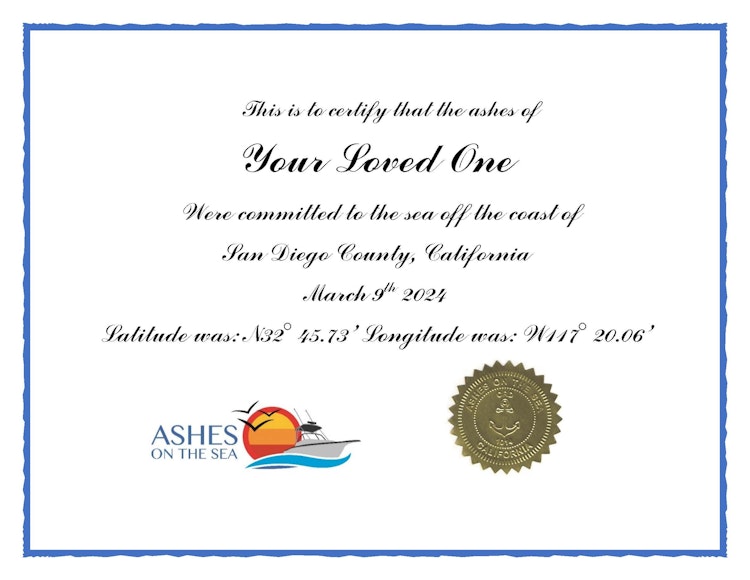
Every burial under the general permit must be reported within 30 days to the EPA region the vessel departed from. The EPA’s online Burial at Sea Reporting Tool takes a few minutes, and you do not need to upload a death certificate (EPA). Professional captains almost always file this report for you and many include the coordinates on a certificate. If you go out on your own boat, the report is your responsibility.
What you can and cannot put in the ocean
- Allowed: cremated or non-cremated human remains; natural flowers, petals and wreaths that decompose readily; urns that sink and dissolve.
- Not allowed: plastic or metal flowers and wreaths, tombstones, monuments, artificial reefs, or anything that will not readily decompose.
- Not allowed: pet or other animal remains, or pet ashes mixed with human ashes. The general permit covers human remains only.
- Not allowed: remains carried out by balloons, rockets or fireworks, or a burning boat or floating pyre. The EPA expects a vessel or aircraft that returns to land.
- Not allowed: ashes mixed with medical waste, or remains sunk inside a monument or concrete structure.
Do states have their own burial-at-sea rules?
States cannot authorize burials in ocean waters or relax the federal 3-nautical-mile rule, but they can add requirements of their own (EPA). California is the main example: it requires a county Permit for Disposition of Human Remains and a verified statement after the scattering (details in the California section below). Bays, lakes and rivers are not ocean waters, so they fall entirely under state law; see our guide to scattering ashes for inland waters and our scattering ashes laws by state for each state’s rules. Georgia also has its own statute: 3 miles out, within 50 days, with a county filing.
Cremation burial at sea vs. full-body burial at sea
Most families choose a cremation burial at sea because it is simpler, works from almost any harbor and costs far less. A full-body burial requires a longer trip to deep water, a vessel equipped to handle the weight, and careful preparation so the body sinks quickly and stays down. The table compares the two.
| Cremated remains | Full body | |
|---|---|---|
| Distance and depth | 3 nautical miles; any depth | 3 nautical miles; at least 600 feet deep (1,800 feet in some Gulf and Florida areas) |
| Typical trip | 1 to 2 hours from most harbors | Often 4 to 6 hours or longer, depending on how far deep water is |
| Container | Scattered loose, or a water urn that sinks and dissolves | Natural-fiber shroud with added weight, or a casket drilled, banded and weighted to at least 300 lb |
| Family aboard | Yes with private charters; no with unattended or Navy services | Yes with private providers; no with the Navy |
| Typical cost (Southern California) | About $175–$500 unattended; $500–$2,600 attended | About $6,500–$10,000 |
Depth and container rules: EPA. Costs: Farrington Mortuary, Southern California price guide.
How a casket or shroud is prepared for a full-body sea burial
The EPA publishes the Navy-derived guidance funeral homes follow. Without a casket, the body is wrapped in a natural-fiber shroud with added weight, such as steel chain, so it sinks quickly. With a casket, the EPA recommends (EPA):
- Remove all plastic from the casket; a metal casket, as the Navy uses, is worth considering.
- Drill at least twenty 2-inch holes: eight on top, eight on the bottom and two at each end, so the casket floods and vents air quickly. Holes may be covered with cloth or paper, but not tape.
- Add sand or concrete (not lead) so the total weight is at least 300 pounds, weighting the foot end so it sinks feet first.
- Secure the casket with at least six stainless-steel bands, chains or natural-fiber ropes: one along each lengthwise axis and four evenly spaced across the narrow axis. Commercial shipping straps deteriorate and should not be used.
How much does a burial at sea cost?
The cost of a burial at sea depends on three things: whether the family comes aboard, how many guests need seats, and whether it is cremated remains or a full body. Federal paperwork is free. Here are published ranges and real prices, so you can budget with confidence.
| Type of service | Typical price | What it usually includes |
|---|---|---|
| Unattended ash scattering at sea (no family aboard) | $175–$500 | Captain scatters the ashes; certificate with date, time and coordinates; EPA report |
| Attended ash scattering (family and friends aboard) | $500–$2,600 | Private charter, usually 1 to 2 hours; small groups cost less, larger yachts more |
| Premium charters, large groups or weekend slots | $2,600 and up | Larger yachts, catering, music, clergy or a celebrant |
| Full-body burial at sea | $6,500–$10,000 | Vessel and crew for a longer trip, shroud or casket preparation, permits |
| California permits | About $12–$70 | County disposition permit and related filings |
| EPA report | $0 | Filed online within 30 days |
Ranges for Southern California from Farrington Mortuary. EPA fees: EPA. Prices elsewhere vary; on the East Coast, deep water for a full-body burial can be 35 to 70 miles out, which adds time and fuel (Ashes on the Sea).
For a real-world comparison, these are current prices for burial at sea and ash scattering services listed on The Memorial Market (prices update automatically from each listing):
| Service | Departs from | Price |
|---|---|---|
| Unattended ash scattering | San Diego, CA | $295 |
| Unwitnessed scattering by plane at sea | Palos Verdes to Newport Beach, CA | $550 |
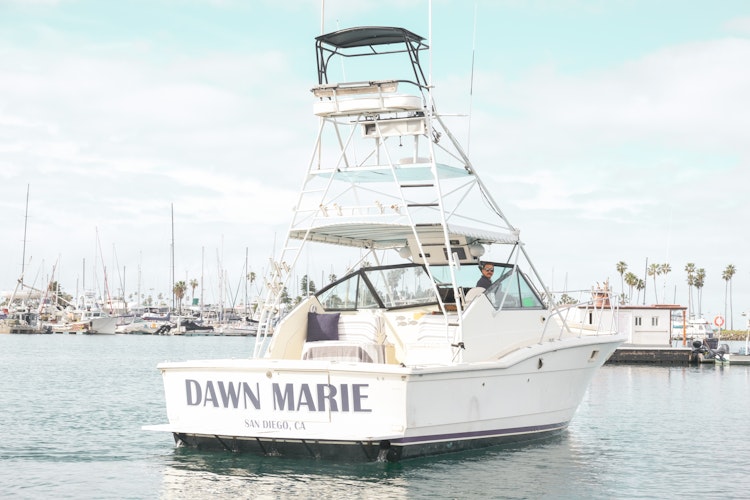
| Private boat, up to 4 guests | San Diego, CA | $695 |
| Private boat, up to 6 guests | Santa Cruz, CA | $795 |
| Private boat, up to 6 guests | San Diego, CA | $995 |
| Sailing yacht, up to 6 guests | San Diego, CA | $1,095 |
| Sailing yacht, up to 10 guests | Oceanside, CA | $1,195 |
| Memorial at sea, up to 24 guests | Los Angeles or Orange County, CA | $1,265 |
| Private boat, up to 6 guests | San Francisco, CA | $1,295 |
| Yacht, up to 49 guests | Newport Beach, CA | $1,995 |
| Yacht, up to 105 guests | San Diego, CA | $3,000 |
Starting prices from each listing. Trip length, guest count and add-ons are on the listing page.
Navy burial at sea for veterans and their families
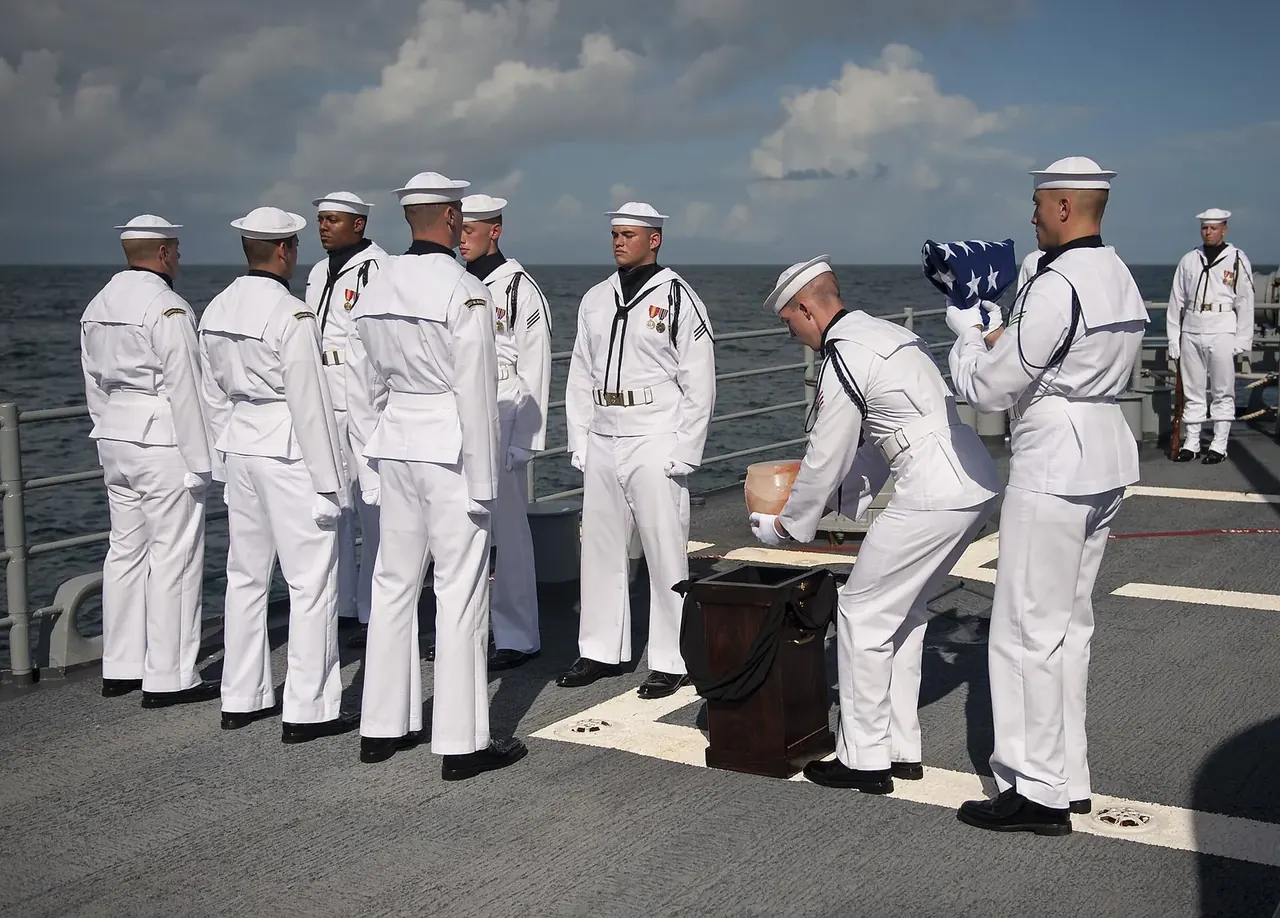
The U.S. Navy performs burials at sea from its ships, submarines and aircraft. The VA’s National Cemetery Administration does not provide this service; the Navy does (VA). Here is how the program works, from the Navy’s own guidance (MyNavy HR). For the full checklist, ports and a VA memorial marker, see our Navy burial at sea guide.
How to plan a burial at sea, step by step
Decide what kind of farewell you want
Family aboard (attended), handled by the captain (unattended), from the air, or through the Navy. If anyone gets seasick, an unattended service plus a shore gathering may be kinder.
Choose a harbor that means something
The marina they sailed from, the coast they vacationed on, or the city where the family lives now. The boat will travel at least 3 nautical miles out from there.
Get the certified death certificate and cremation paperwork
Your funeral home or crematory provides these. In California you also need a county Permit for Disposition that names scattering at sea; most providers help you with it.
Book the boat and the date
Compare passenger limits, trip length, what is included and the weather policy. Experienced captains often suggest an early-morning departure, when the sea is usually calmest and wind is least likely to blow ashes back aboard (Sunset Kidd).
Plan the ceremony
Pick readers, a reading or prayer, music, and flowers. Decide who will release the ashes and whether you will use a water urn.
Prepare the ashes
Ashes usually arrive in a plastic temporary container, which cannot go in the ocean. Ask your captain whether to bring them as they are, or transfer them to a biodegradable urn.
On the day
Dress in layers and soft-soled shoes. The captain will stop the engines, position the boat downwind and invite the family to the stern.
Afterward
Keep the certificate with the coordinates. The captain or you must report to the EPA within 30 days; in California a verified statement goes to the county registrar within 10 days.
Choosing a burial at sea service: questions to ask
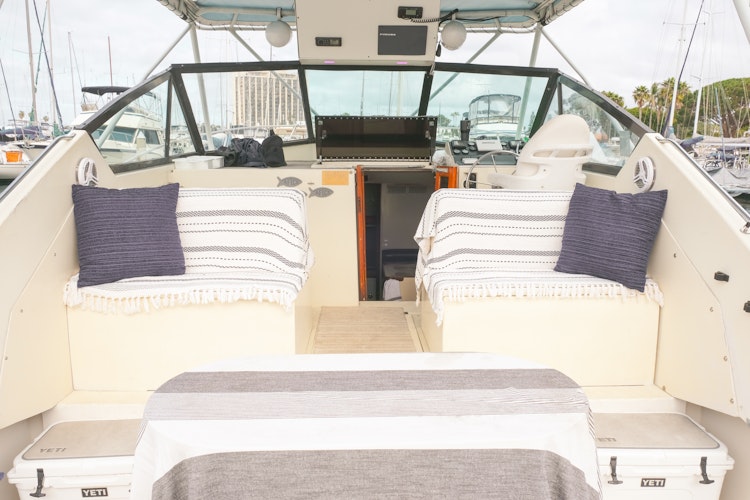
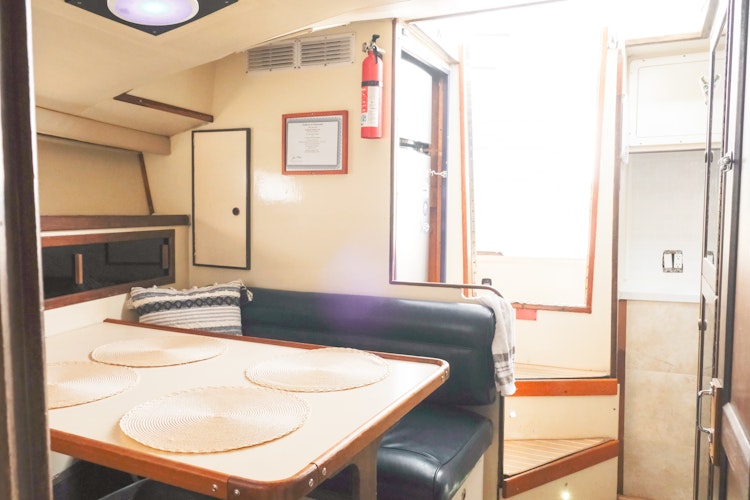
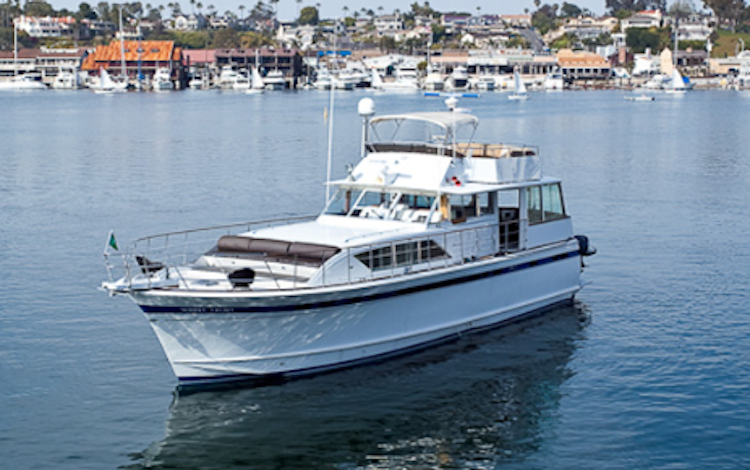
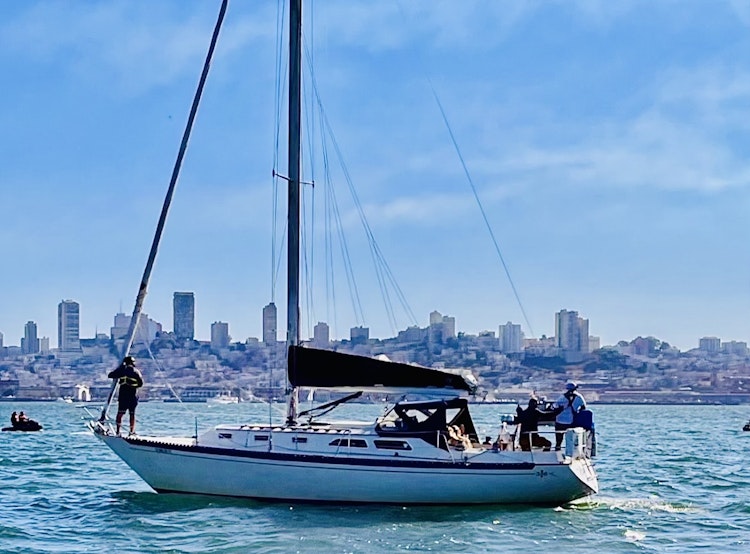
There are three main types of burial at sea services. An attended scattering puts your family on a private boat for one to two hours. An unattended scattering means the captain carries out the burial on a scheduled trip and sends you a certificate with the coordinates. An aerial scattering at sea releases the ashes from a small plane, sometimes with family watching from the shore. Whichever you choose, ask:
- Is the captain licensed by the U.S. Coast Guard, and is the vessel inspected for the number of guests you are bringing?
- How long is the trip, and how far offshore do you go? (It must be at least 3 nautical miles.)
- Who files the EPA report and any state paperwork? Will we get a certificate with latitude and longitude?
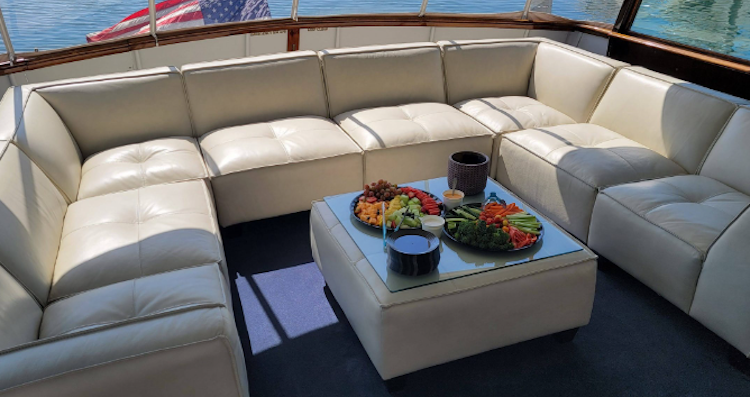
- What is included: flowers, a non-denominational committal, music, drinks, photos?
- What happens if weather cancels the trip? Is the deposit refundable or moved to a new date?
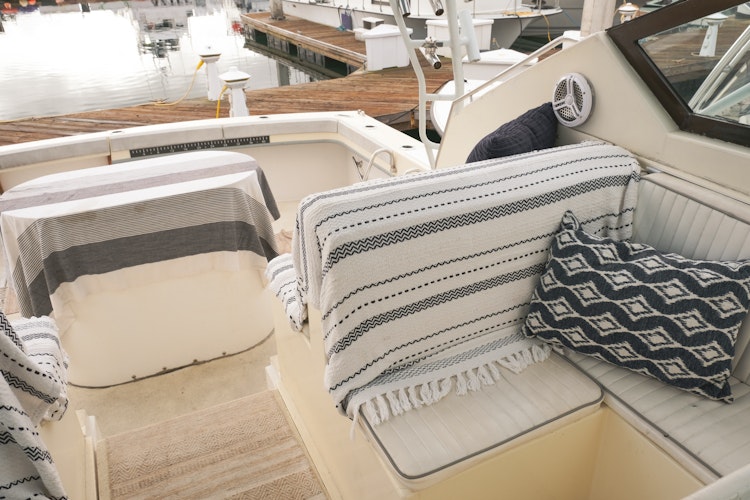
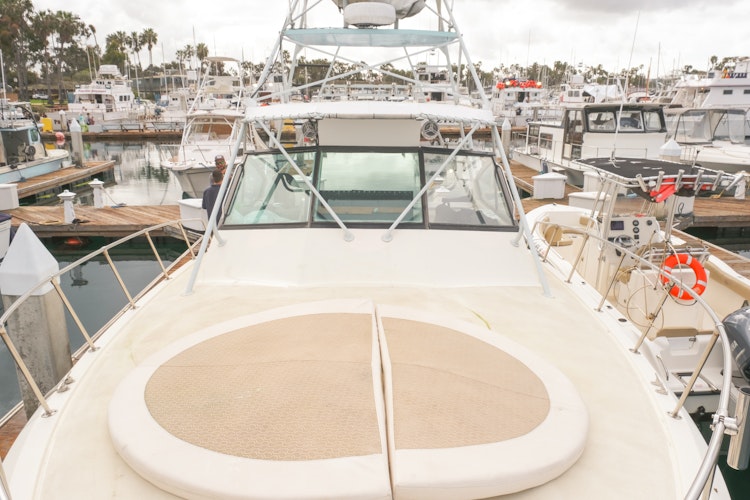
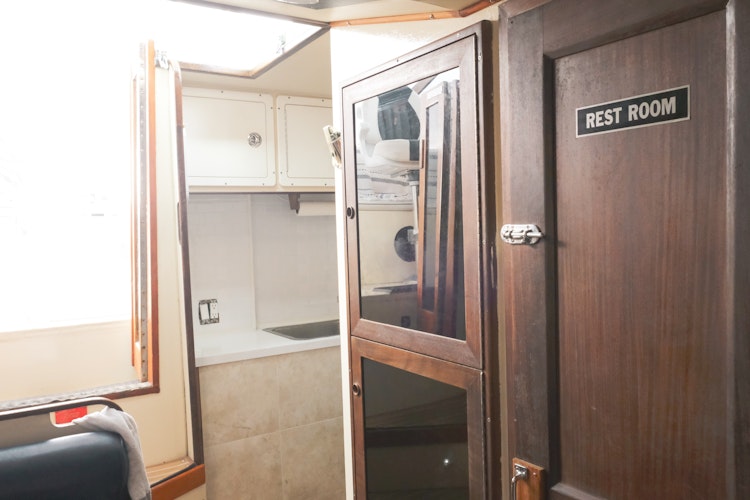
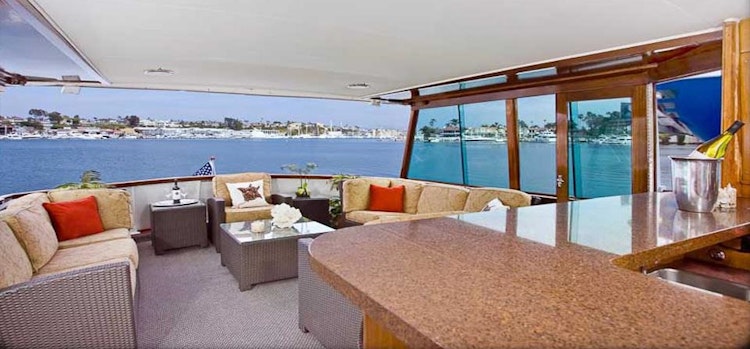
- Is the boat accessible for older guests or wheelchairs? Is there a restroom and shade?
- Can we bring our own food, drinks, music or clergy?
You can compare boat and plane providers side by side on our ash scattering services page.
Burial at sea ceremony ideas, prayers and readings
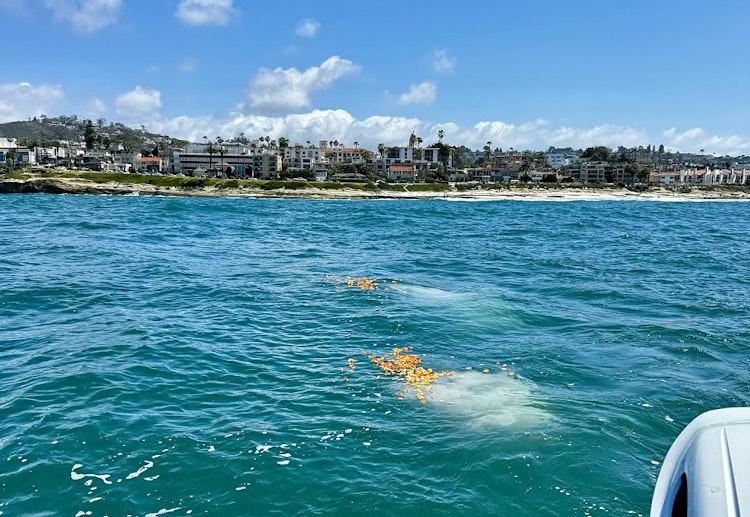
A sea burial does not need to be formal. Most last a few minutes once the boat stops: someone shares a memory, someone reads, the ashes are released, and everyone drops flowers on the water as the boat circles the spot. Ideas families love:
- Each guest drops a single rose or a handful of petals as they say a word or two about the person.
- Play the song they always played on the boat, at the beach, or in the car.
- Pour a small toast of their favorite drink into the water (keep the bottle aboard).
- Ring a ship’s bell, or ring “eight bells,” the old maritime signal that a sailor’s watch has ended.
- Have the captain circle the spot slowly so everyone sees the flowers drift together.
- Write messages on natural, unprinted paper and keep them aboard, or read them aloud and keep them in a memory box.
- Hold a celebration of life on shore afterward, with photos and a framed copy of the coordinates.
Traditional burial at sea prayers and readings
These classic texts are in the public domain and are among the most requested for a burial at sea. Adapt the pronouns as needed. For full texts, more poems, secular words and an order of service, see our burial at sea prayers and readings.
Unto Almighty God we commend the soul of our brother departed, and we commit his body to the deep; in sure and certain hope of the Resurrection unto eternal life, through our Lord Jesus Christ.
They that go down to the sea in ships, that do business in great waters; These see the works of the LORD, and his wonders in the deep.
Sunset and evening star, And one clear call for me! And may there be no moaning of the bar, When I put out to sea.
Eternal Father, strong to save, Whose arm hath bound the restless wave.
Catholic burial at sea
Catholic families should know the Church’s guidance before planning. The Order of Christian Funerals asks that cremated remains be treated with the same respect as the body and buried or entombed, and it says that “the practice of scattering cremated remains on the sea, from the air, or on the ground … [is] not the reverent disposition that the Church requires” (no. 417, quoted by the USCCB). Many Catholic families therefore ask their parish about committing the ashes to the sea intact in a worthy, sinking urn rather than scattering them. Talk with your priest; he can also lead the committal prayers aboard.
Water urns and biodegradable urns for burial at sea
A water urn (also called a biodegradable sea urn or scattering urn) is made of paper, sand, salt, gelatin or plant fiber. Many designs float for a moment, which gives the family time to watch and toss flowers, then sinks and dissolves, releasing the ashes beneath the surface. It is a good choice on a windy day, when scattering loose ashes over the side can blow them back onto the boat.

- Federal rule: a container is allowed if it has no plastic of any kind, does not float away, and ideally degrades or dissolves quickly (EPA).
- Navy rule: cremains should arrive in a sturdy spun-brass or biodegradable urn; plastic cannot be discharged at sea (MyNavy HR).
- California rule: a “scattering urn” must dissolve and release its contents within 4 hours, and the ashes may be moved into it no more than 7 days before a boat scattering. Scattering urns cannot be used for scattering by plane (Cemetery and Funeral Bureau).
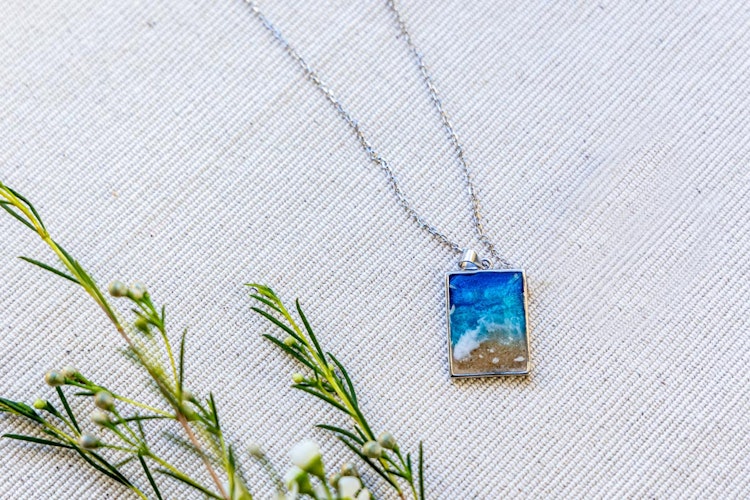
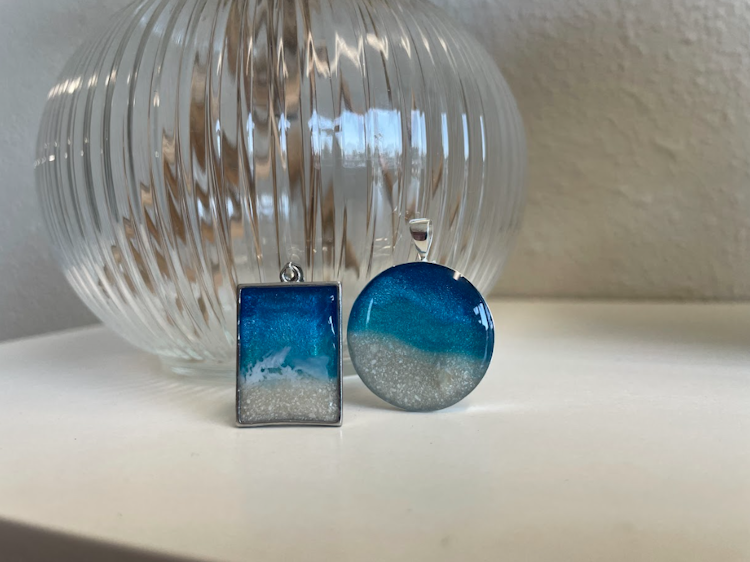
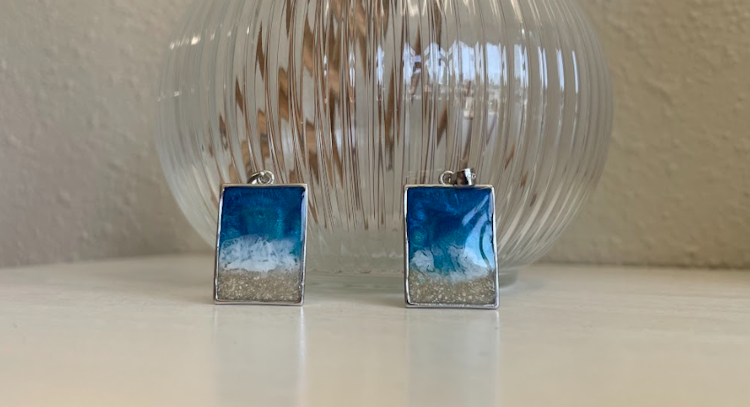
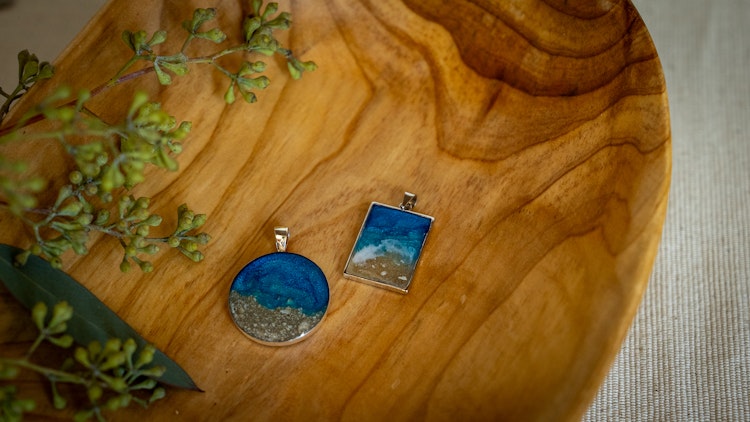
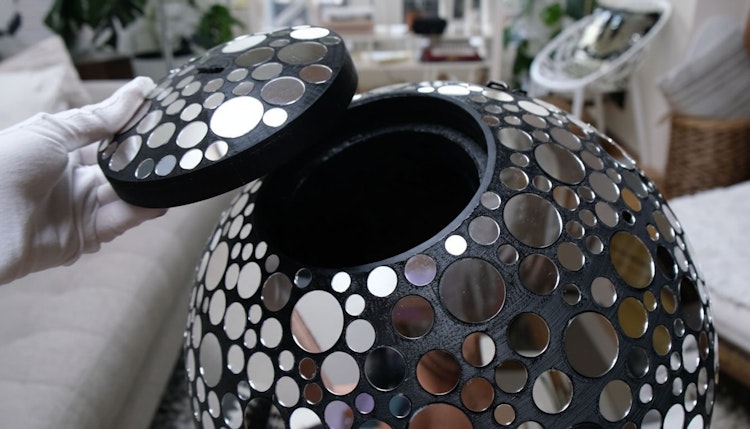
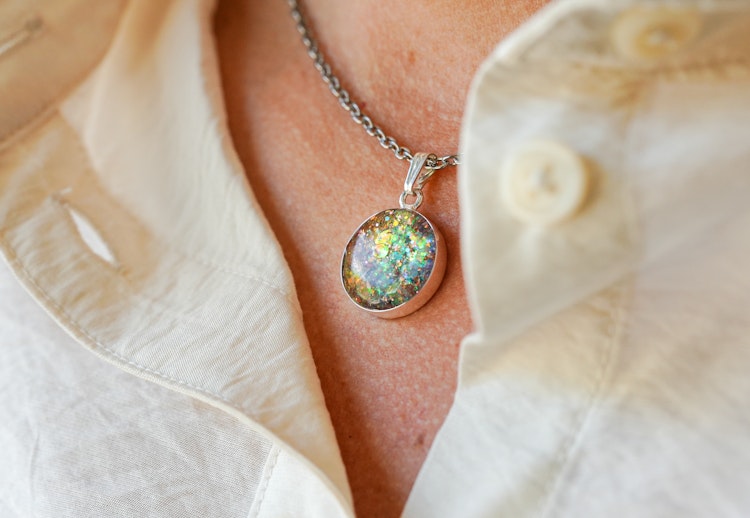
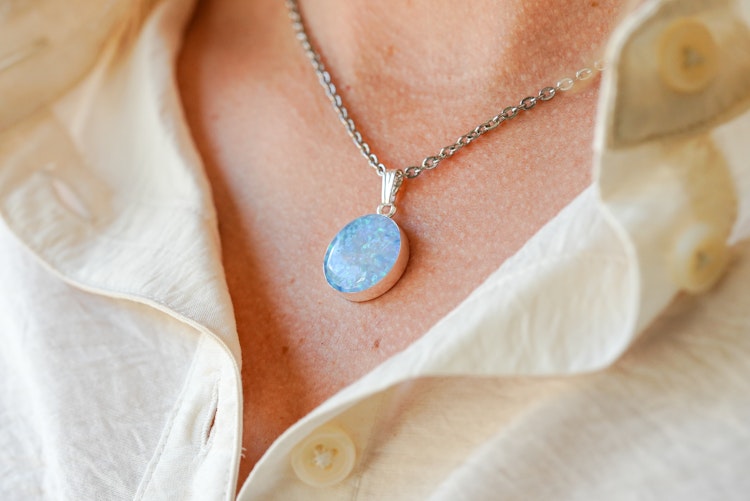
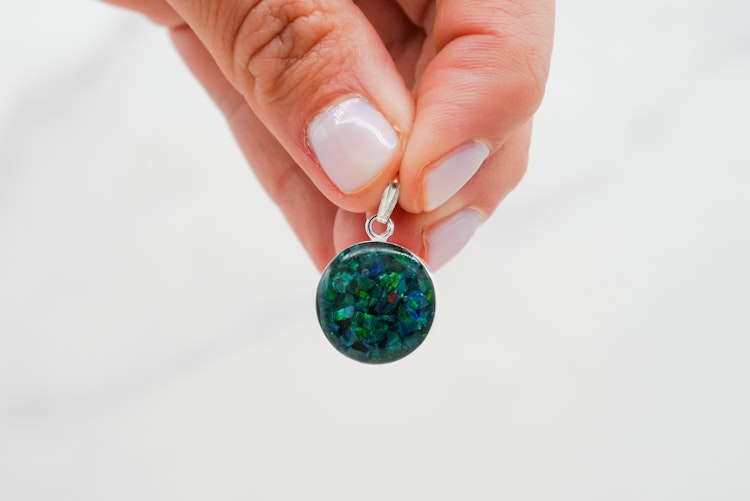
Many families keep a small portion of the ashes at home before the voyage. Our makers create keepsake urns, cremation jewelry that holds a pinch of ashes, ocean-themed pieces and art, so a little of the person stays close after the rest returns to the sea. For more earth- and ocean-friendly options, read eco-friendly memorials.






Burial at sea in California and San Diego
California is the busiest place in the country for scattering ashes at sea, and it layers its own rules on top of the federal ones. Under Health and Safety Code § 7117:
- Ashes may be taken by boat from any harbor in the state, or by air, and scattered at sea.
- The ashes must be removed from their container before scattering, unless you use an approved scattering urn from a boat (§ 7117.1).
- Within 10 days, the person who scattered must file a verified statement with the local registrar in the county nearest the scattering point, with the name of the deceased, the time and place of death, and where the ashes were scattered.
- No scattering within 500 yards of the shoreline, and never from a bridge or pier. Inland navigable waters count as “at sea,” but lakes and streams do not.
- The federal 3-nautical-mile rule still applies in ocean waters, which is why California State Parks says you cannot scatter ashes on California beaches (California State Parks).
You will also need a Permit for Disposition of Human Remains that lists scattering at sea as the final disposition. In San Diego County it costs $12 per permit from the county Office of Vital Records (County of San Diego). Funeral homes and most scattering providers prepare it with you.
Burial at sea in San Diego
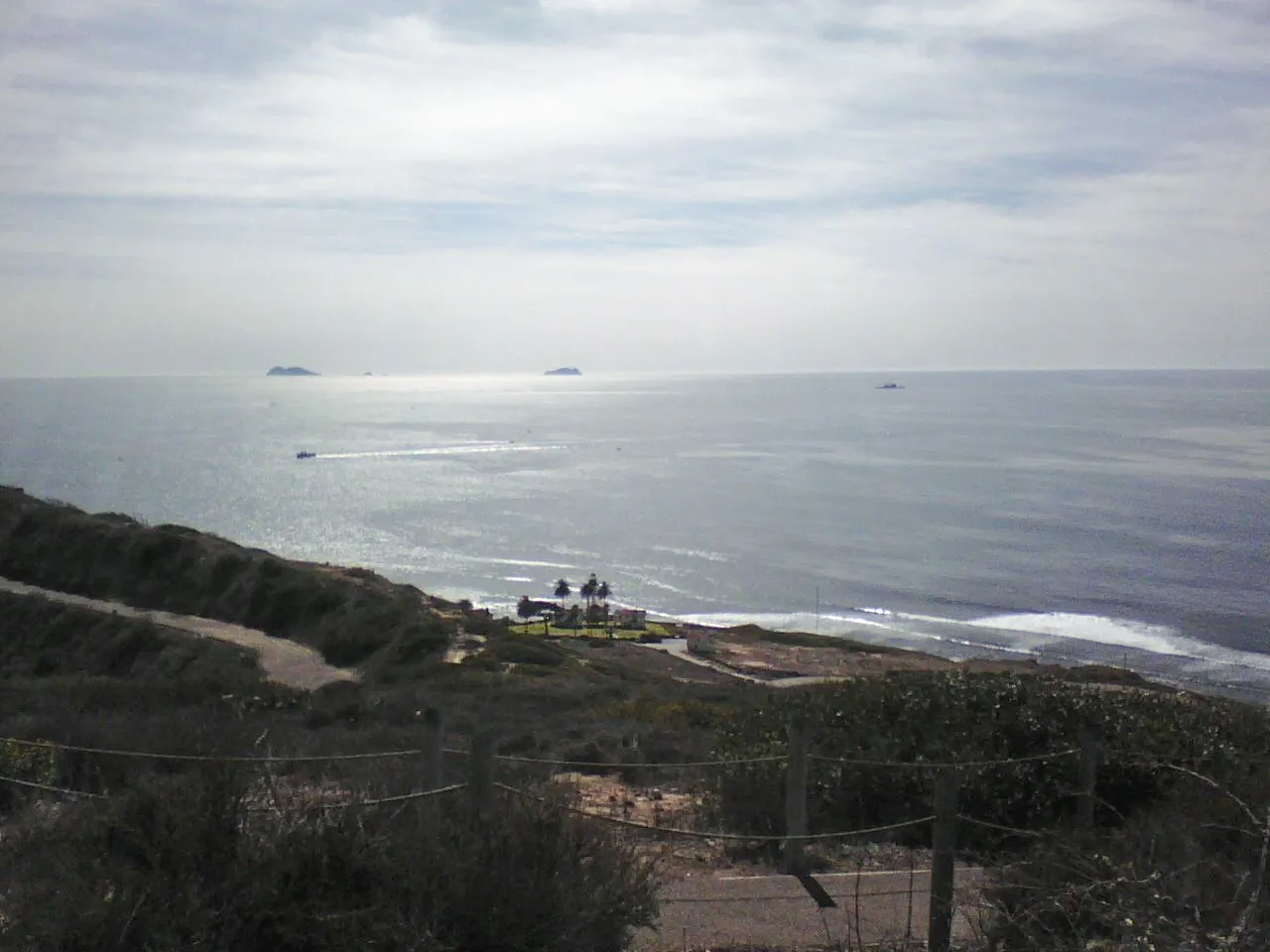
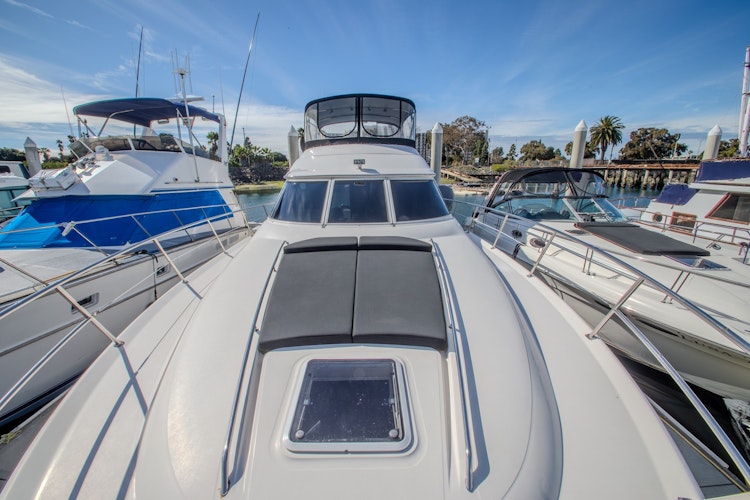
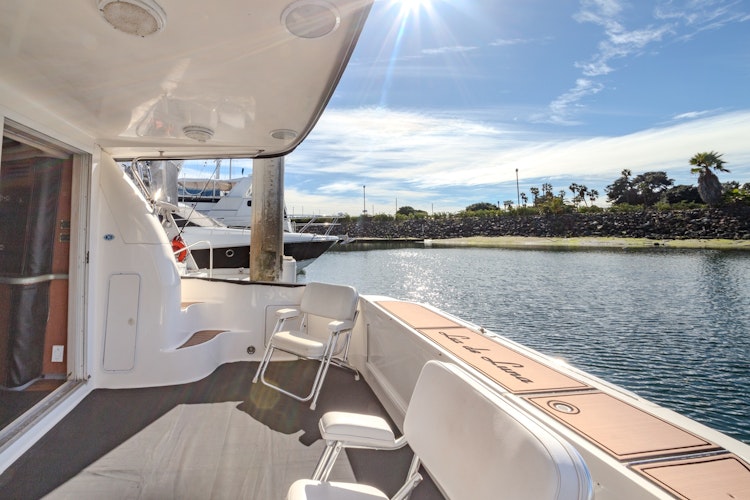
San Diego scattering boats leave from marinas inside San Diego Bay and head out past Point Loma into the open Pacific, where they continue until they are at least 3 nautical miles from land. Some families ask the captain for a spot they can look toward from a favorite place on shore, such as Cabrillo National Monument on Point Loma, and return there on anniversaries. San Diego is also one of the Navy’s two ports for casketed burials at sea.
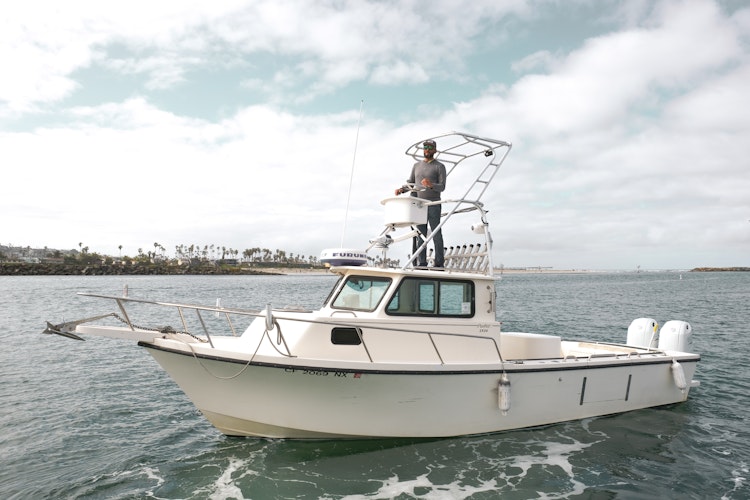
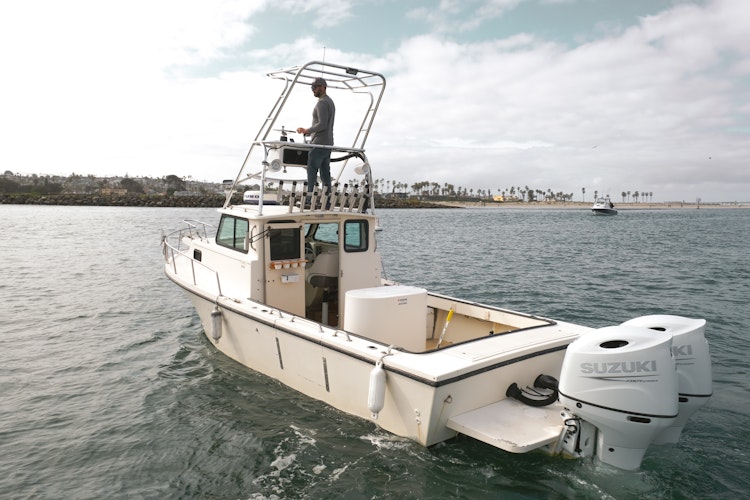
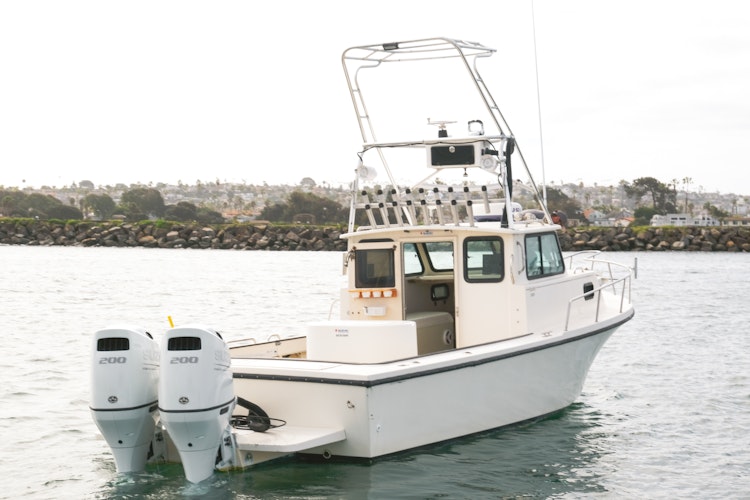
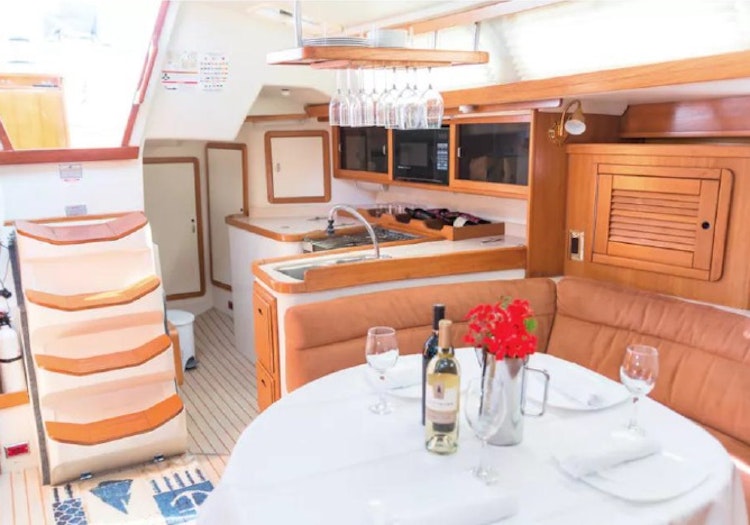
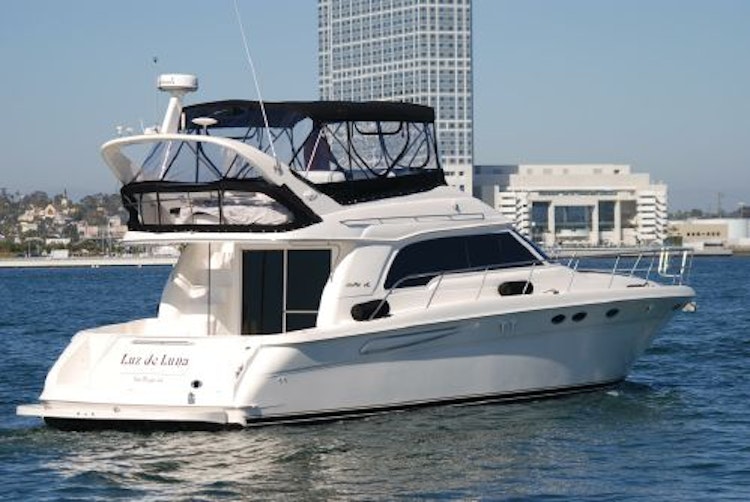
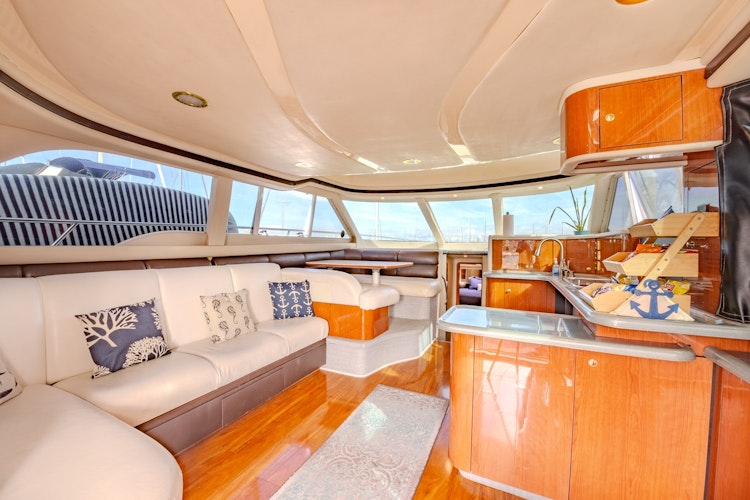
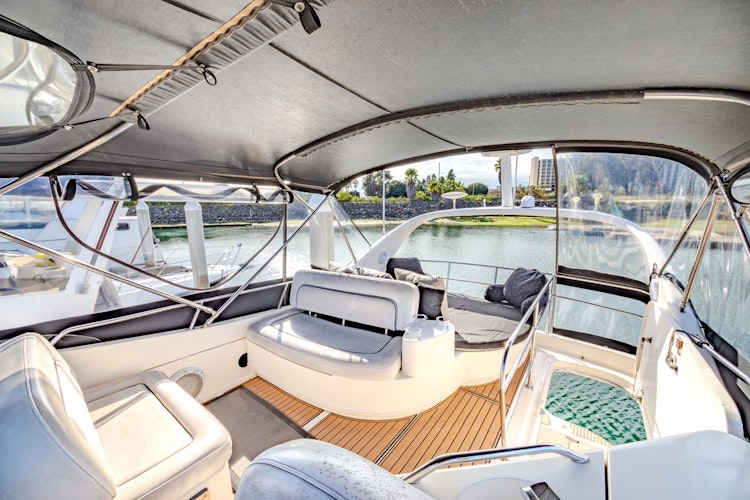
On The Memorial Market, San Diego scatterings range from an unattended service at $295 to a private yacht for up to 105 guests at $3,000. See costs, rules and departure points in our San Diego burial at sea guide, local shops on our San Diego page, read about San Diego ash scattering at sea, or browse the services below.


Elsewhere on the California coast
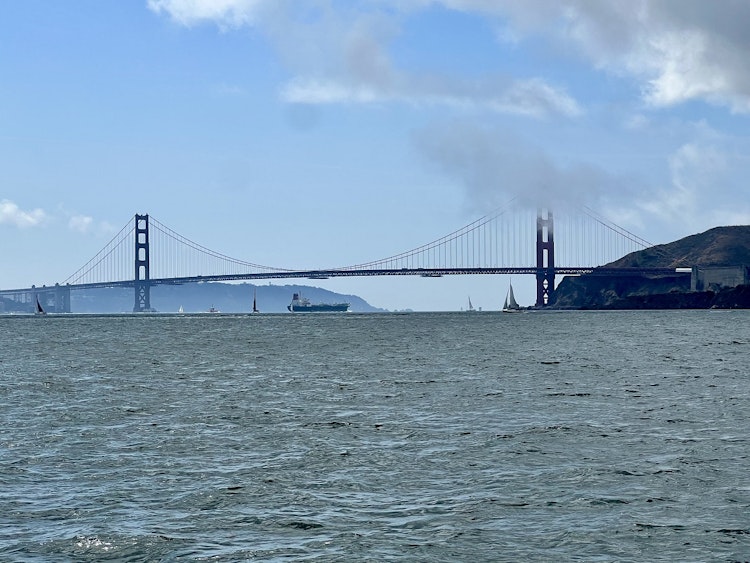
North of San Diego, families sail from Oceanside, Dana Point and Newport Beach in Orange County; from Los Angeles and Orange County harbors; and up north from Santa Cruz and San Francisco, where California law lets you scatter inside the bay 500 yards from shore. City guides: burial at sea in Los Angeles and Orange County and burial at sea in San Francisco and Santa Cruz. Our California scattering laws, California guide and the Los Angeles and San Francisco pages list local options.
Other ways to return ashes to the ocean
- Scattering by plane over the ocean. A pilot releases the ashes beyond 3 nautical miles; some services let family watch from a beach at a set time. See ash scattering by plane at sea and our scattering ashes guide.
- Memorial cruises. Multi-night trips such as an Alaska ash scattering memorial cruise or a Bahamas ash scattering cruise combine a scattering with time together. Cruise lines set their own rules, so the service handles the arrangements.
- Pets. Pet ashes cannot be buried at sea under the EPA general permit, and cannot be mixed with human ashes for a sea burial. Our pet urns and memorials offer other ways to keep them close.
Frequently asked questions
Is burial at sea legal in the United States?
Yes. The EPA authorizes burial at sea of both cremated and non-cremated human remains under a general permit at 40 CFR 229.1. There is no application and no fee, but the burial must take place at least 3 nautical miles from land and be reported to the EPA within 30 days.
How far offshore do you have to go to scatter ashes at sea?
At least 3 nautical miles from land, which is about 3.45 statute miles or 5.6 kilometers. Land is measured from the ordinary low-water mark or a closing line across the mouth of a bay or river.
How much does a burial at sea cost?
In Southern California, an unattended ash scattering at sea typically costs about $175 to $500, a family-attended charter about $500 to $2,600, and a full-body burial at sea about $6,500 to $10,000. There is no EPA fee; California county permits add roughly $12 to $70.
Do I need a permit for a burial at sea?
Not from the EPA: its general permit covers you, and you only report the burial within 30 days. Some states add requirements. California requires a county Permit for Disposition of Human Remains and a verified statement to the local registrar within 10 days of the scattering.
Can you do a full-body burial at sea?
Yes. The body must be buried at least 3 nautical miles from land in water at least 600 feet deep (1,800 feet in parts of Florida and the Gulf), and weighted so it sinks quickly and permanently, either in a natural-fiber shroud with added weight or in a casket drilled with holes, banded and weighted to at least 300 pounds.
Who is eligible for a Navy burial at sea?
Active-duty and retired members of the uniformed services, honorably discharged veterans, U.S. civilian marine personnel of the Military Sealift Command, and dependents of current and former service members. Start by calling the MyNavy Career Center or a Navy port of embarkation for the request packet.
Can family attend a Navy burial at sea?
No. The Navy performs the committal while the ship is deployed, so families cannot be present. Afterward the commanding officer sends the family the date, time, latitude and longitude. The average wait is 12 to 18 months after the remains reach the port.
What do you say at a burial at sea?
Anything that feels true to the person: a short memory from each guest, a favorite poem, or a traditional reading such as the Book of Common Prayer committal (“we commit his body to the deep”), Psalm 107:23–24, or Tennyson’s “Crossing the Bar.”
Can I put flowers in the ocean during a burial at sea?
Yes, if they break down naturally. Real flowers, petals and leis are fine. Plastic or metal flowers, ribbons, wire and floral foam are not allowed and should be removed before the boat leaves the dock.
Can I bury my pet at sea?
Not under the EPA general permit. It covers human remains only, and pet ashes cannot be mixed with human ashes for a burial at sea.
Does the Catholic Church allow burial at sea?
The Order of Christian Funerals (no. 417) says scattering cremated remains on the sea is not the reverent disposition the Church requires and asks that ashes be buried or entombed. Many Catholic families ask their priest about committing the ashes to the sea intact in a worthy, sinking urn instead.
Can I scatter ashes from a beach or pier?
Not as a burial at sea. Federal law requires 3 nautical miles from land, and California specifically prohibits scattering from a bridge or pier or within 500 yards of the shoreline. Hold a gathering on the beach, then go out by boat or plane.
Do I get proof that the burial happened?
Reputable captains give a certificate with the date, time and GPS coordinates, and file the EPA report. The Navy notifies families of the date, time and coordinates once the committal is complete.
General information, not legal advice. Laws and agency policies change; confirm with the agency, landowner or your provider before you go.
Sources
Every rule and price range above comes from these pages, checked November 17, 2026.
- U.S. EPA, Burial at Sea
- 40 CFR 229.1, Burial at sea (eCFR)
- U.S. Navy (MyNavy HR), Burial at Sea program
- U.S. Department of Veterans Affairs, Burial at sea
- California Health and Safety Code § 7117
- California Cemetery and Funeral Bureau, Cremated Remains Disposers booklet (HSC §§ 7116, 7117, 7117.1)
- California State Parks, Scattering ashes of loved ones in state parks
- County of San Diego, Burial (disposition) permits
- Farrington Mortuary, Southern California burial at sea costs
- Ashes on the Sea, Full-body burial at sea FAQ
- Sunset Kidd Sailing, Burials at sea and ash scattering (timing and prices)
- USCCB, Cremation and the Order of Christian Funerals