Scattering Ashes in Georgia: Laws, Permits and Where You Can Scatter
Georgia is one of the few states with its own burial at sea statute, and it adds a filing the federal rules don’t: a verified statement to the county registrar. On land, state parks need the site manager’s OK. Here is every rule, with sources.
By The Memorial Market Editorial Team · Updated · 6 min read

Quick answer
Yes, scattering ashes is legal in Georgia. At sea, O.C.G.A. §31-21-4 lets cremated remains go by boat from any Georgia harbor, or by air, to a point at least 3 miles from the nearest shoreline, out of their container, within 50 days of cremation, and the person who scatters must file a verified statement with the local registrar in the county nearest the spot. The federal EPA report is also due within 30 days. In Georgia State Parks, scattering is prohibited except under conditions set by the site manager, so ask first. On private land, get the owner’s permission.
Key facts
- Sea or air: at least 3 miles from the nearest shoreline, remains removed from the container (O.C.G.A. §31-21-4).
- Georgia sets a 50-day window from cremation for burial at sea, extendable for bad weather.
- File a verified statement with the local registrar in the county nearest the burial point, plus the EPA Region 4 report within 30 days.
- Georgia State Parks: prohibited except under conditions set by the site manager.
- Private land: the owner’s permission. Cumberland Island and other national park areas follow NPS permit rules.
Georgia scattering ashes laws at a glance
| Where | The rule | Source |
|---|---|---|
| Your own land | Allowed | No Georgia location statute found |
| Someone else’s land | Owner’s permission | Common practice |
| Georgia State Parks and historic sites | Prohibited except under conditions set by the site manager | Ga. Comp. R. & Regs. 391-5-1-.04 |
| Cumberland Island and other national park areas | Permit or designated area under 36 CFR 2.62; ask the park | 36 CFR 2.62 |
| Ocean (by boat or air) | 3+ miles from shore, within 50 days of cremation, registrar statement | O.C.G.A. §31-21-4 |
| Federal sea report | EPA Region 4 within 30 days | EPA |
Georgia’s burial at sea law
Georgia’s statute says cremated or organically reduced remains “may be taken by boat from any harbor in this state, or by air, for burial at sea at a point not less than three miles from the nearest shoreline,” and the remains must be removed from their container first (O.C.G.A. §31-21-4(a)(1)).
Scatter within 50 days
The burial at sea must happen within 50 days of cremation. It may be delayed if bad weather makes it unsafe (O.C.G.A. §31-21-4(a)(2)).
File a verified statement
File it with the local registrar of vital records in the county nearest the burial point, with the name of the deceased, the time and place of death, the place of burial, and anything else the registrar requires.
Report to the EPA
Federal law separately requires a report to EPA Region 4 within 30 days, and its 3-nautical-mile rule is measured from the low-water line or the closing lines across bays and sounds.
The 2025 amendment, effective July 1, 2025, extended the same rules to organically reduced (composted) remains. If a long time has passed since cremation, ask the registrar or your funeral director how to handle the 50-day window before booking a boat.
Scattering ashes on land and in Georgia State Parks
Georgia’s state park rules list scattering of cremated remains among prohibited acts, “except under conditions established by the site manager” (Ga. Comp. R. & Regs. 391-5-1-.04). That makes it a phone call, not a flat no: contact the park or historic site, explain what you’d like to do, and follow the conditions they give you.
We found no Georgia statute limiting scattering on private land, so get the owner’s permission. Cumberland Island National Seashore and other national park areas follow the National Park Service rule that scattering needs a permit or a designated area, so contact the park first (36 CFR 2.62).
Scattering ashes at sea from Georgia
Boats leave Savannah, Tybee Island, Brunswick and St. Simons Island for scatterings offshore. A licensed captain usually handles the EPA report; ask whether they also file the Georgia registrar statement, or file it yourself.
- Distance: at least 3 nautical miles from land under the EPA general permit (40 CFR 229.1).
- Report: whoever scatters reports it to the EPA within 30 days. Georgia reports go to EPA Region 4 (Southeast) (EPA).
- What can go in: the ashes, a biodegradable urn and loose natural flowers. No plastic, metal or synthetic wreaths.
- No application ahead of time: the general permit covers every lawful burial at sea; you just follow it and report.
Veterans: the U.S. Navy commits the ashes of eligible veterans and their dependents at sea from Navy ships. The nearest Navy port of embarkation is Jacksonville, FL (Naval Station Mayport), about two hours from Savannah; the family does not attend (Navy; see our Navy burial at sea guide).
Planning a ceremony on the water? Our burial at sea guide covers costs, boats and water urns, and our burial at sea prayers and readings has words to read when the ashes go in.
Ash scattering services and keepsakes for Georgia families
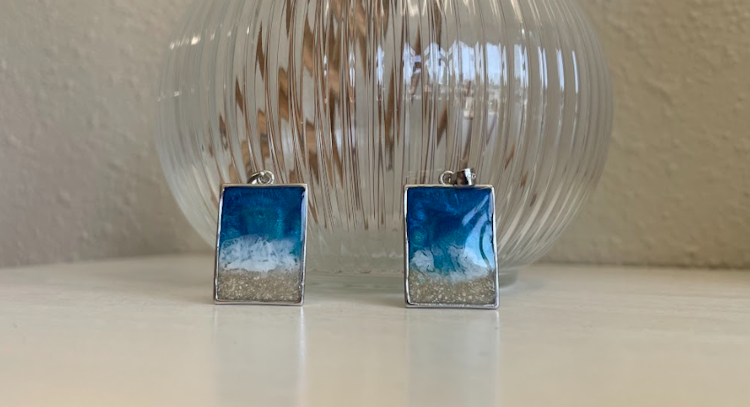
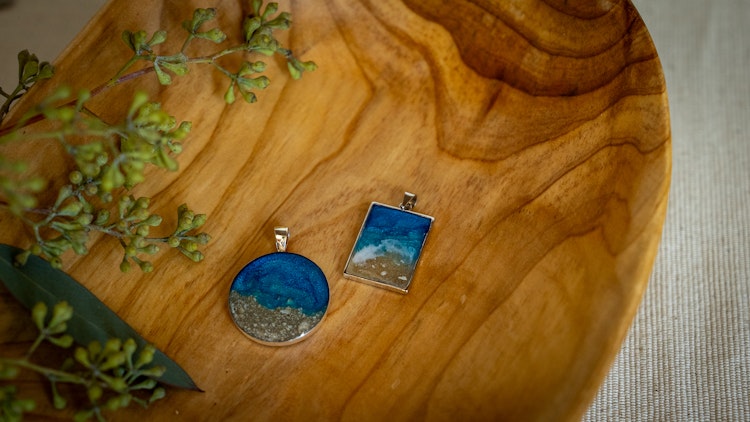
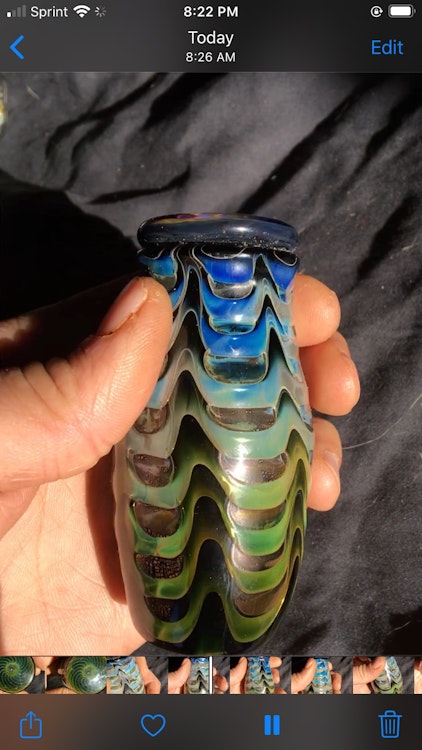
No Georgia scattering boat is listed on The Memorial Market yet. For the portion you keep, here are cremation jewelry and keepsakes from our makers.




















How to plan a scattering in Georgia, step by step
Confirm who decides
The person with the legal right to control disposition (usually the named agent, spouse or next of kin) makes the call. If relatives disagree, settle it before anything is scattered.
Pick the place and ask
Use the table above. Get permission from the landowner or the agency in writing where the rules call for it, and carry it with you.
Check permits
National parks, some state parks and some cities issue permits or set conditions. Ask a few weeks ahead.
Prepare the ashes
Remove them from any non-biodegradable container. Use a scattering urn or tube, or a biodegradable water urn at sea.
Keep a portion if you like
Many families set aside a spoonful for cremation jewelry or a small keepsake urn before the scattering.
Report sea scatterings
If you scatter in the ocean yourself, report it to the EPA within 30 days. Licensed boat services usually do this for you.
Choosing how to scatter? See the ten ways to scatter ashes, from casting and trenching to boats, planes and fireworks, and our ceremony ideas.
Scattering ashes laws in other states
- Scattering ashes in California
- Scattering ashes in Florida
- Scattering ashes in Texas
- Scattering ashes in New York
- Scattering ashes in Washington
- Scattering ashes in Hawaii
- Scattering ashes in Oregon
- Scattering ashes in Arizona
- Scattering ashes in Alaska
- Scattering ashes in Nevada
- Scattering ashes in Colorado
- Scattering ashes in Massachusetts
- Scattering ashes in North Carolina
- Scattering ashes in New Jersey
- Scattering ashes in Pennsylvania
- Scattering ashes in Michigan
- Scattering ashes in Tennessee
- Scattering ashes in Alabama
Compare every state in one table on our scattering ashes laws by state page.
Frequently asked questions
Is it legal to scatter ashes in Georgia?
Yes. Georgia law expressly allows burial at sea of cremated remains at least 3 miles from shore, and we found no statute limiting scattering on private land with the owner’s permission. State parks require the site manager’s conditions.
How far out do you have to scatter ashes off Georgia?
Georgia law says at least 3 miles from the nearest shoreline; federal law says at least 3 nautical miles from land. Go 3 nautical miles out to satisfy both.
Is there a time limit for burial at sea in Georgia?
Yes. O.C.G.A. §31-21-4 says the burial at sea must happen within 50 days of cremation, with a delay allowed for unsafe weather.
Who do I notify after a burial at sea in Georgia?
File a verified statement with the local registrar of vital records in the county nearest the burial point, and report to EPA Region 4 within 30 days.
Can you scatter ashes in Georgia state parks?
Only under conditions set by the site manager. The state park rules prohibit it otherwise, so call the park first.
Can you scatter ashes on Tybee Island?
For the beach, ask the city. For a scattering at sea, go at least 3 nautical miles offshore by boat, then file the county registrar statement and the EPA report.
General information, not legal advice. Laws and agency policies change; confirm with the agency, landowner or your provider before you go.
Sources
Every rule and price range above comes from these pages, checked November 17, 2026.
- O.C.G.A. §31-21-4, Cremated remains; burial at sea (via Justia)
- Ga. Comp. R. & Regs. 391-5-1-.04, Prohibited acts in state parks (via Cornell LII)
- U.S. EPA, Burial at Sea (general permit and FAQ)
- 40 C.F.R. 229.1, Burial at sea general permit
- 36 C.F.R. 2.62, Memorialization in national parks
- U.S. Navy, Burial at Sea program (MyNavy HR)