Scattering Ashes in Massachusetts: Laws, Permits and Where You Can Scatter
Massachusetts is one of the easiest states for scattering ashes. The Department of Public Health says there are no restrictions on what happens to ashes after cremation, only that you ask the owner of the land first. The sea, Cape Cod National Seashore and inland waters each add a rule or two. Here they are, with sources.
By The Memorial Market Editorial Team · Updated · 7 min read
Quick answer
Yes, scattering ashes is legal in Massachusetts. The Department of Public Health says there are no restrictions on the disposition of ashes once cremation has occurred, but you should get permission from the landowner or the managing agency first: the town for town land, the Department of Conservation and Recreation (DCR) for a state park. At Cape Cod National Seashore you can scatter without a permit if you stay 100 yards from trails, roads, facilities and water. At sea, go 3 nautical miles out and report to EPA Region 1 within 30 days. Lakes, ponds and rivers may need a local or state permit.
Key facts
- No restrictions on ashes once cremation has occurred; get the landowner’s or agency’s permission first (Mass. DPH).
- State parks: ask the Department of Conservation and Recreation (DCR). Town land: ask the town.
- Cape Cod National Seashore: no permit if ashes are scattered 100+ yards from trails, roads, developed facilities and water; otherwise a permit.
- At sea: 3 nautical miles out for ashes; a full body needs 600+ feet of water, typically 25 to 75 miles off Massachusetts.
- Report every burial at sea to EPA Region 1 within 30 days. Inland waters may need local and state permits.
Massachusetts scattering ashes laws at a glance
| Where | The rule | Source |
|---|---|---|
| Your own land | Allowed; no restrictions on ashes after cremation | Mass. DPH |
| Someone else’s land | Get the owner’s permission first | Mass. DPH |
| Town land | Ask the municipal government | Mass. DPH |
| State parks and forests (DCR) | Ask the Department of Conservation and Recreation | Mass. DPH |
| Cape Cod National Seashore | No permit if 100+ yards from trails, roads, facilities and water (air: 2,000+ ft); otherwise permit | NPS compendium |
| Lakes, ponds and rivers | Clean Water Act applies; may need local and state permits, and local bans may exist | Mass. DPH |
| Ocean | 3 nautical miles out; report to EPA Region 1 within 30 days | Mass. DPH |
Is it legal to scatter ashes in Massachusetts?
Yes. The Massachusetts Department of Public Health puts it plainly: “There are no restrictions on the disposition of ashes once cremation has occurred. However, prior to the dispersal of cremated remains, permission should be obtained from the land owner or the applicable agency (e.g. – municipal government for town land, or the Department of Conservation and Recreation for a state park, etc.)” (Mass. DPH).
The paperwork happens before the cremation, not before the scattering. A burial permit (permit for disposition) is issued by the board of health or its agent in the town where the death occurred (M.G.L. c. 114, §45), and cremation needs a medical examiner’s certificate and, in most cases, a 48-hour wait (Mass. DPH). The state’s law library also points families to the federal sea rules and general scattering guidance (Mass. Trial Court Law Libraries).
Scattering ashes on Cape Cod and in national parks
Cape Cod National Seashore is one of the few national parks that lets families scatter without a permit, as long as they follow its conditions. Its superintendent’s compendium says (NPS):
- The remains must be cremated and pulverized.
- On the ground, scatter at least 100 yards from any trail, road, developed facility or body of water.
- From the air, fly at 2,000 feet or higher, and not over developed areas, facilities or water.
- Anything else, such as a spot closer to the beach or a larger gathering, needs a permit from the park.
Because the 100-yard rule keeps you back from the water, the beach itself is not a no-permit spot. Many families walk into the dunes or heathlands behind the beach, or hold a gathering on the sand and scatter at sea by boat.
Lakes, ponds and rivers in Massachusetts
The Department of Public Health says inland water burials fall under the Clean Water Act and require a permit from the appropriate local and state agencies, adds that cremated remains generally don’t pollute or pose a health hazard, and warns that local prohibitions may exist in some waters (Mass. DPH). Drinking-water reservoirs are the most likely to be off limits. Ask the town or the agency that manages the water before you go.
Scattering ashes at sea from Massachusetts
Massachusetts follows the federal rules for the ocean, and the state health department spells them out: cremated remains go at least 3 nautical miles offshore with no depth requirement, while a full-body burial needs at least 600 feet of water, which off Massachusetts “typically means the burial must take place between 25 and 75 miles offshore” (Mass. DPH).
The report to EPA Region 1 is due within 30 days and lists the name of the deceased, the date, the type of remains, the latitude and longitude, the distance from land, the water depth for a full body, and the contact for whoever was responsible (Mass. DPH). Harbors and bays inside the closing lines drawn on nautical charts are not “ocean waters” under the EPA permit, so boats leaving Boston, Gloucester, Plymouth or the Cape run out past the harbor mouth first. The state health department also notes that the U.S. Coast Guard accepts cremated remains (not caskets) for eligible service members, veterans and dependents.
- Distance: at least 3 nautical miles from land under the EPA general permit (40 CFR 229.1).
- Report: whoever scatters reports it to the EPA within 30 days. Massachusetts reports go to EPA Region 1 (New England) (EPA).
- What can go in: the ashes, a biodegradable urn and loose natural flowers. No plastic, metal or synthetic wreaths.
- No application ahead of time: the general permit covers every lawful burial at sea; you just follow it and report.
Veterans: the U.S. Navy commits the ashes of eligible veterans and their dependents at sea from Navy ships. The nearest Navy port of embarkation is Norfolk, VA (Naval Medical Center Portsmouth), the closest Navy port of embarkation to New England; the family does not attend (Navy; see our Navy burial at sea guide).
Planning a ceremony on the water? Our burial at sea guide covers costs, boats and water urns, and our burial at sea prayers and readings has words to read when the ashes go in.
Ash scattering services and keepsakes for Massachusetts families
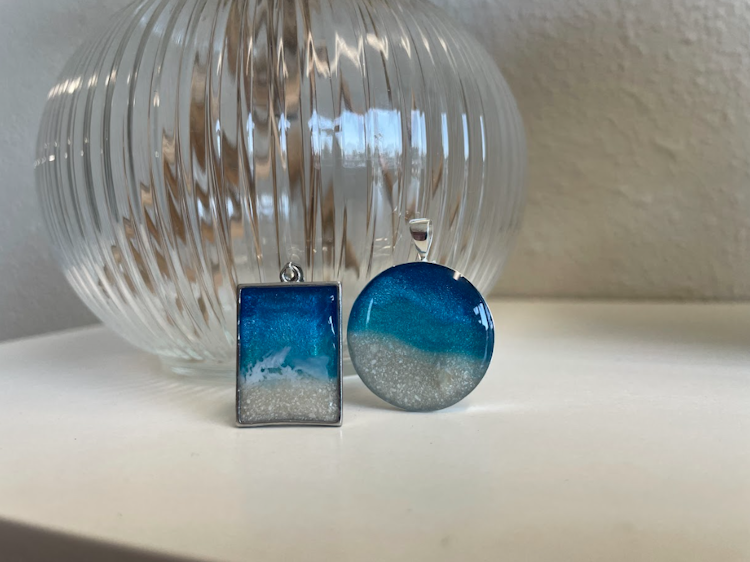
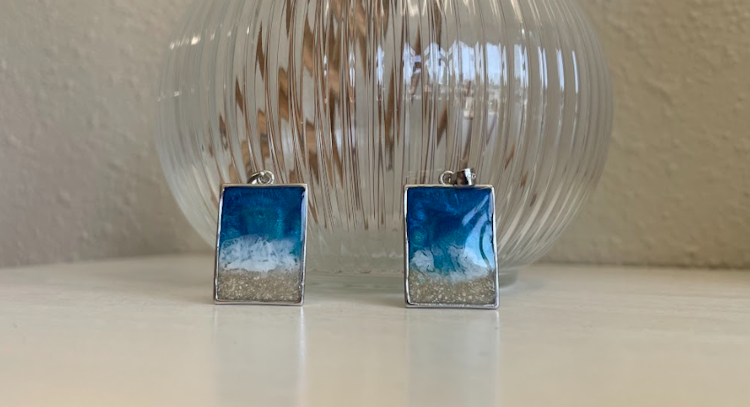
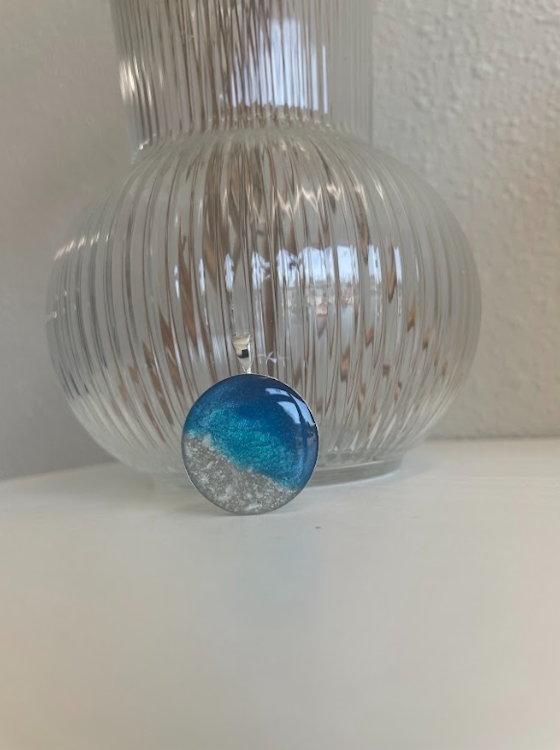
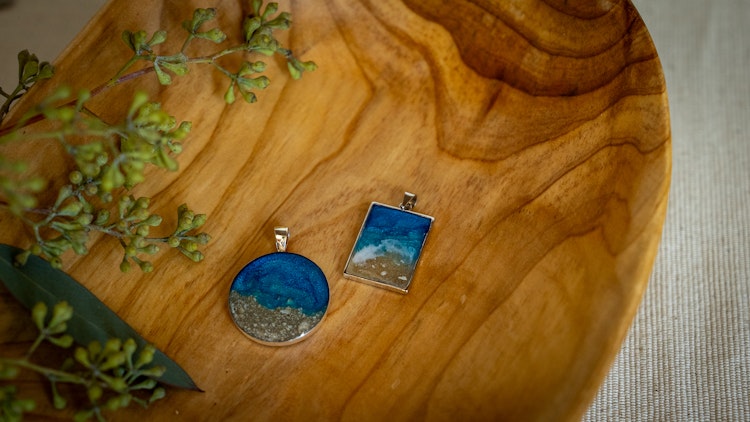
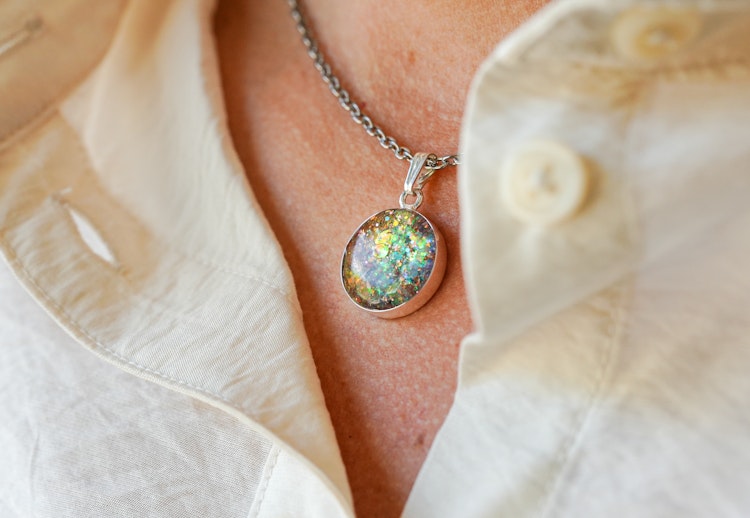
No Massachusetts scattering boat is listed on The Memorial Market yet. For the portion you keep, here are cremation jewelry and keepsakes from our makers, including sea-inspired pieces.

















How to plan a scattering in Massachusetts, step by step
Confirm who decides
The person with the legal right to control disposition (usually the named agent, spouse or next of kin) makes the call. If relatives disagree, settle it before anything is scattered.
Pick the place and ask
Use the table above. Get permission from the landowner or the agency in writing where the rules call for it, and carry it with you.
Check permits
National parks, some state parks and some cities issue permits or set conditions. Ask a few weeks ahead.
Prepare the ashes
Remove them from any non-biodegradable container. Use a scattering urn or tube, or a biodegradable water urn at sea.
Keep a portion if you like
Many families set aside a spoonful for cremation jewelry or a small keepsake urn before the scattering.
Report sea scatterings
If you scatter in the ocean yourself, report it to the EPA within 30 days. Licensed boat services usually do this for you.
Choosing how to scatter? See the ten ways to scatter ashes, from casting and trenching to boats, planes and fireworks, and our ceremony ideas.
Scattering ashes laws in other states
- Scattering ashes in California
- Scattering ashes in Florida
- Scattering ashes in Texas
- Scattering ashes in New York
- Scattering ashes in Washington
- Scattering ashes in Hawaii
- Scattering ashes in Oregon
- Scattering ashes in Arizona
- Scattering ashes in Alaska
- Scattering ashes in Nevada
- Scattering ashes in Colorado
- Scattering ashes in North Carolina
- Scattering ashes in New Jersey
- Scattering ashes in Georgia
- Scattering ashes in Pennsylvania
- Scattering ashes in Michigan
- Scattering ashes in Tennessee
- Scattering ashes in Alabama
Compare every state in one table on our scattering ashes laws by state page.
Frequently asked questions
Is it legal to scatter ashes in Massachusetts?
Yes. The Massachusetts Department of Public Health says there are no restrictions on the disposition of ashes once cremation has occurred, but you should get permission from the landowner or the managing agency first.
Can you scatter ashes on Cape Cod?
Yes. In Cape Cod National Seashore you can scatter without a permit if the ashes are cremated and pulverized and you stay at least 100 yards from trails, roads, developed facilities and water. Closer than that, you need a permit from the park. On town beaches, ask the town.
Can you scatter ashes in Massachusetts state parks?
Ask first. State parks are run by the Department of Conservation and Recreation (DCR), and the state health department says to get the agency’s permission before scattering.
How far out do you have to go for a burial at sea in Massachusetts?
At least 3 nautical miles for cremated remains, in water of any depth. A full-body burial needs at least 600 feet of water, which off Massachusetts is usually 25 to 75 miles offshore. Report it to EPA Region 1 within 30 days.
Can I scatter ashes in Boston Harbor or Cape Cod Bay?
Harbors and bays inside the closing lines on nautical charts are not covered by the EPA ocean permit, and the state treats inland waters as needing local and state permits. For a clearly compliant sea scattering, go at least 3 nautical miles into open ocean.
Can I scatter ashes in a lake or pond in Massachusetts?
Possibly, but ask first. The state health department says inland water burials need a permit from the appropriate local and state agencies and that local bans exist in some waters, especially drinking-water sources.
Do I need a permit to scatter ashes in Massachusetts?
Not from the state for the scattering itself. The burial permit is issued before cremation by the town where the death occurred. You need permission from the landowner or agency, a permit inside Cape Cod National Seashore if you don’t meet its conditions, and possibly local permits for inland waters.
Can veterans be buried at sea from Massachusetts?
Yes. The Navy accepts cremated remains of eligible veterans and dependents at its ports, the closest being Norfolk, Virginia, and the Coast Guard accepts cremated remains too. Families do not attend Navy committals.
General information, not legal advice. Laws and agency policies change; confirm with the agency, landowner or your provider before you go.
Sources
Every rule and price range above comes from these pages, checked November 17, 2026.
- Massachusetts Department of Public Health, Issues to consider in preparing for disposition of decedents
- Massachusetts General Laws c. 114, §45, Burial permits
- Massachusetts Trial Court Law Libraries, Massachusetts law about burial, cremation, and funerals
- Cape Cod National Seashore, Superintendent’s Compendium (36 CFR 2.62)
- U.S. EPA, Burial at Sea (general permit and FAQ)
- 40 C.F.R. 229.1, Burial at sea general permit
- 36 C.F.R. 2.62, Memorialization in national parks
- U.S. Navy, Burial at Sea program (MyNavy HR)