Burial at Sea in Florida: Rules, Costs and Where Boats Go
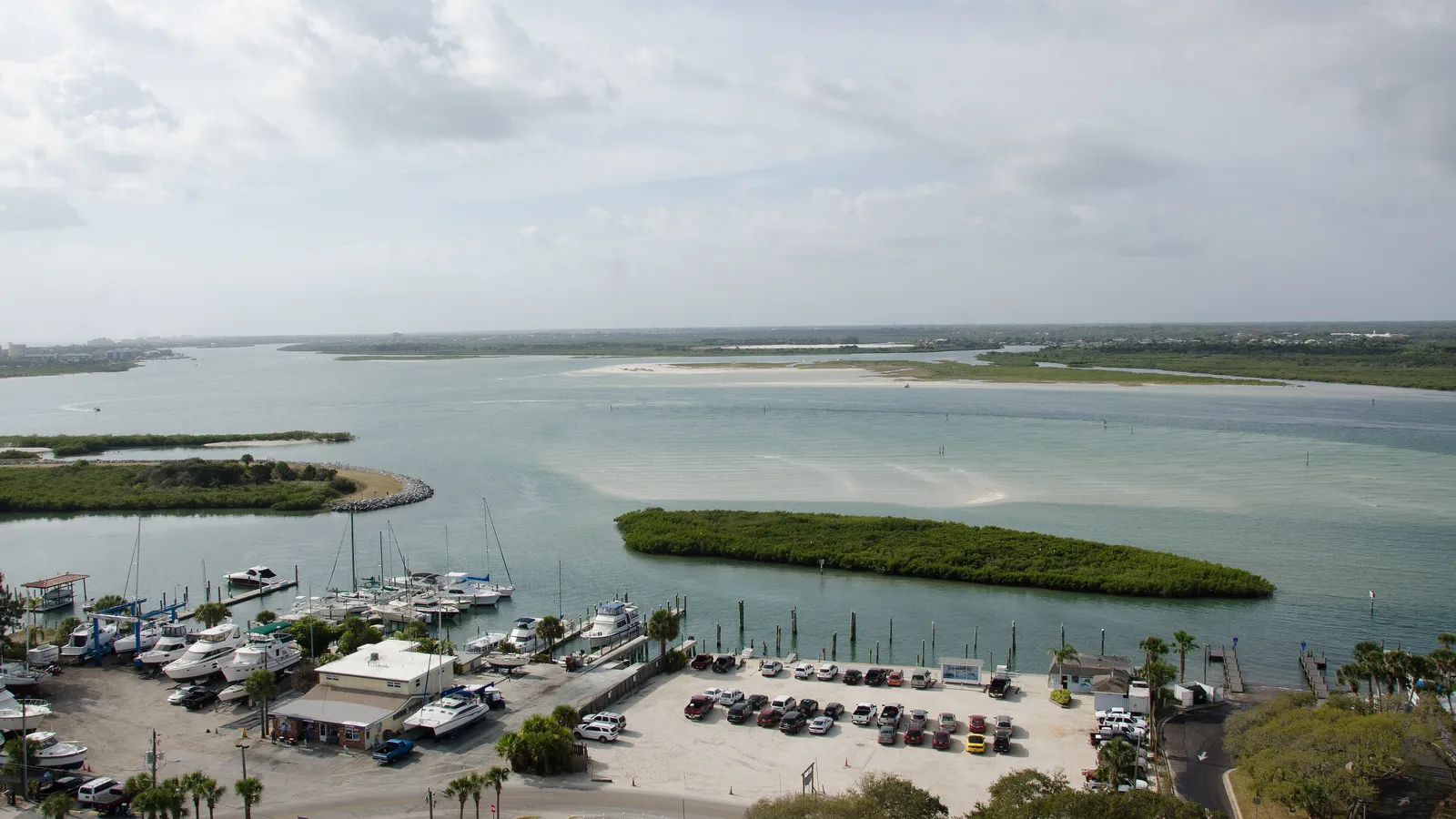
With the Atlantic on one side and the Gulf on the other, Florida has the longest coastline in the lower 48 states. The federal rules are the same everywhere, but Florida adds a few twists: bays and the Intracoastal don’t count as ocean, the Keys are a marine sanctuary, and deep water for a full-body burial is farther out in some areas. Here is how it all works.
By The Memorial Market Editorial Team · Updated · 8 min read
Quick answer
A burial at sea in Florida means scattering ashes in the Atlantic or the Gulf at least 3 nautical miles from land under the EPA general permit, and reporting it to EPA Region 4 within 30 days. There is no application or fee. Bays, rivers and the Intracoastal Waterway are inland waters, not ocean, so boats go out through an inlet or pass first. Inside the Florida Keys National Marine Sanctuary, depositing any material is prohibited with narrow exceptions, and Biscayne National Park requires a special use permit. Published prices run from $99 unattended to about $600–$925 for a private trip in Fort Lauderdale. Eligible veterans can be committed at sea by the Navy from Jacksonville (Mayport).
Key facts
- Ocean: at least 3 nautical miles from land on the Atlantic or Gulf; report to EPA Region 4 within 30 days; no application, no fee.
- Bays, rivers and the Intracoastal are inland waters, outside the EPA permit; distance is counted from a line across their mouths.
- Full body: at least 600 feet of water, and at least 1,800 feet off east central Florida, the Dry Tortugas and west of Pensacola.
- Florida Keys National Marine Sanctuary bans depositing any material in its waters, with exceptions that don’t mention cremated remains.
- Biscayne National Park: special use permit, at least 15 business days to review.
- Navy burial at sea: Jacksonville (Naval Station Mayport) accepts cremated remains.
Where “the sea” starts in Florida
The EPA general permit covers cremated remains in ocean waters of any depth at least 3 nautical miles from land, measured from the low-water line or from a closing line drawn across the openings of bays and rivers (EPA; 40 CFR 229.1). Lakes, rivers and bays are left to the states.
| Water | Status | What to do |
|---|---|---|
| Atlantic Ocean (Jacksonville to Miami) | Ocean water under the EPA permit | Go 3+ nautical miles past the beach or inlet; report to EPA Region 4 within 30 days |
| Gulf of Mexico (Panhandle to Naples) | Ocean water under the EPA permit | Go 3+ nautical miles past the beach or pass; report within 30 days |
| Tampa Bay, Biscayne Bay, Charlotte Harbor and other bays | Inland water | Not covered by the EPA permit; boats run out through the pass or inlet |
| Intracoastal Waterway, rivers and springs | Inland water | Not covered; ask the agency that manages the water |
| Florida Keys waters | National marine sanctuary | Sanctuary rules ban depositing material; ask before you plan (see below) |
Florida law itself doesn’t limit where families scatter. The person arranging the cremation signs a declaration stating what will happen to the remains, and the funeral home handles that paperwork (Fla. Stat. §497.607). For the state-level rules on land, see scattering ashes in Florida.
The Florida Keys and Biscayne National Park
The Florida Keys National Marine Sanctuary prohibits discharging or depositing “any material or other matter” within its boundary, except for a short list such as fishing bait and routine vessel water. Cremated remains are not on the list (15 CFR 922.163). We found no published sanctuary guidance on ash scattering, so contact NOAA’s sanctuary office before planning a scattering in Keys waters, or scatter in open ocean outside the sanctuary.
Biscayne National Park requires a Special Park Use Permit to scatter ashes in the park. It must be a small private affair away from busy areas; ashes must be fully dispersed; nothing may be left behind, not even dried flowers or plants with seeds; and the EPA rules (3 nautical miles out, report to Region 4 within 30 days) still apply. Allow at least 15 business days for review (NPS).
How a Florida burial at sea works
Choose a coast and harbor
Atlantic families often leave from Jacksonville, Port Canaveral, Palm Beach, Fort Lauderdale or Miami; Gulf families from Clearwater, St. Petersburg, Sarasota, Naples or the Panhandle. Pick the shortest run through an inlet or pass to open water.
Book a licensed captain
Look for a U.S. Coast Guard–licensed captain who offers memorial trips, and ask whether they file the EPA report for you.
Prepare the ashes
Bring them in the crematory container to pour, or in a biodegradable water urn. Only the ashes, the urn and loose natural flowers go in the water.
The ceremony
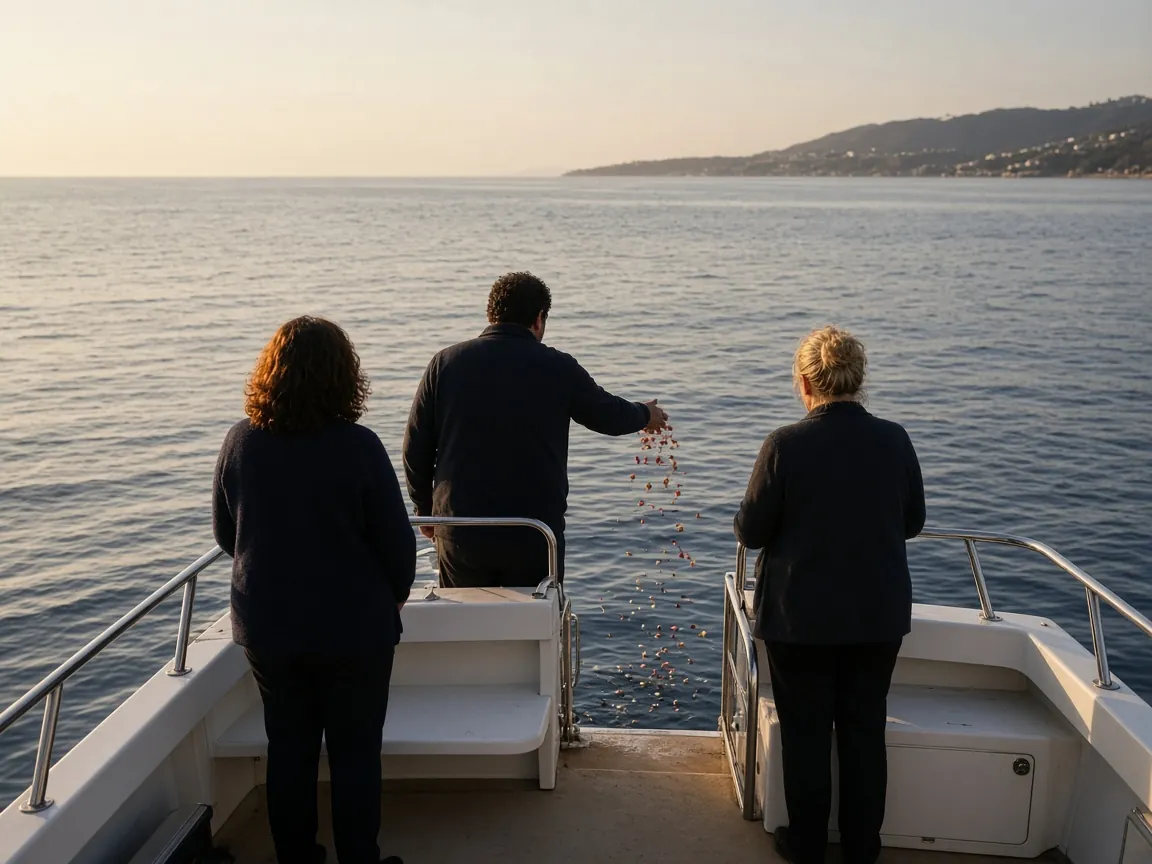
Past 3 nautical miles, the captain idles, someone reads, the ashes are released and flowers follow. Our burial at sea prayers and readings can help.
Report it
Within 30 days, report the burial to EPA Region 4, the region the boat departed from (EPA).
Full-body burials need water at least 600 feet deep. Off east central Florida, the Dry Tortugas, and west of Pensacola to the Mississippi River Delta, the EPA requires at least 1,800 feet, so the trip is longer (EPA).
How much a burial at sea costs in Florida
| Service | Where | Published price |
|---|---|---|
| Unattended scattering | Fort Lauderdale | $99 (operator) |
| Unattended scattering | Miami | From $195 (operator) |
| Attended, up to 6 guests | Fort Lauderdale | $600 (operator) |
| Attended, up to 6 guests, 90 minutes | Miami | From $895 (operator) |
| Attended, 7 or more guests | Fort Lauderdale | $925 (operator) |
Prices as published by each operator; we link them only as sources. See our burial at sea cost guide for other regions.
No Florida boat is listed on The Memorial Market yet. Families who would rather scatter on a cruise can look at our four-night Bahamas ash scattering cruise for two, which departs from Fort Lauderdale.

Scattering on land and in state parks
Florida State Parks has no policy against scattering ashes but no designated sites; its guidance is to stay at least 200 feet from any lake, spring, river, ocean or wetland, keep away from developed areas, and leave no markers (Florida State Parks FAQ). On private land, ask the owner. Full details are on our Florida scattering laws page and the city pages for Miami, Tampa and Orlando.
Frequently asked questions
Is burial at sea legal in Florida?
Yes. Under the EPA general permit you can scatter cremated remains in the Atlantic or the Gulf at least 3 nautical miles from land, and report it to EPA Region 4 within 30 days. No application or fee is needed.
Can you scatter ashes in Tampa Bay or Biscayne Bay?
Bays are inland waters, outside the EPA burial at sea permit, which counts the 3 nautical miles from a line across the mouth of a bay. For a clearly lawful sea burial, go out past the pass or inlet. Biscayne National Park also requires a special use permit.
Can you scatter ashes in the Florida Keys?
Keys waters are inside the Florida Keys National Marine Sanctuary, which bans depositing any material with exceptions that don’t mention cremated remains. Contact the sanctuary office before planning a scattering there.
Can you scatter ashes in the Intracoastal Waterway?
The Intracoastal is inland water, so the EPA ocean permit doesn’t cover it, and we found no Florida rule that does. Most families go 3 nautical miles out into the ocean instead.
How much does a burial at sea cost in Florida?
Published prices include $99 for an unattended scattering and $600 for up to six guests in Fort Lauderdale, and from $195 unattended and $895 attended in Miami.
How deep does the water need to be for a full-body burial at sea in Florida?
At least 600 feet, and at least 1,800 feet off east central Florida, the Dry Tortugas, and west of Pensacola to the Mississippi River Delta.
Where does the Navy do burials at sea in Florida?
From Jacksonville (Naval Station Mayport), for cremated remains of eligible veterans and dependents. Families do not attend.
General information, not legal advice. Laws and agency policies change; confirm with the agency, landowner or your provider before you go.
Sources
Every rule and price range above comes from these pages, checked November 22, 2026.
- U.S. EPA, Burial at Sea
- 40 C.F.R. 229.1, Burial at sea general permit
- 15 C.F.R. 922.163, Florida Keys National Marine Sanctuary prohibited activities
- Biscayne National Park, Special use permit for scattering of ashes
- Florida Statutes §497.607, Cremation procedure
- Florida State Parks, FAQs (scattering ashes)
- U.S. Navy, Burial at Sea program (MyNavy HR)
- Fort Lauderdale operator, attended burial at sea prices
- Fort Lauderdale operator, unattended burial at sea price
- Miami operator, sea scattering prices